- A Smaller Diode Step Does Not Automatically Give a Better Slope
 Compare two current brackets around 0.50 mA and see when endpoint uncertainty hides a diode voltage change, with center returns and a resistor control.
- Change Gain with a Partial Emitter Bypass
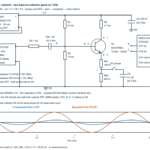 Measure two base-referenced 1 kHz gains in a BC547BBU stage, then check DC bias and restoration as a film capacitor bypasses one emitter resistor.
- Normalize an ACS724 Reading, Then Measure What Still Changes
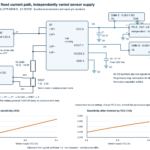 Hold a measured signed current while changing an ACS724 supply. Fit zero and gain, divide output by supply, and keep unresolved residuals visible.
- Ground a Foil Screen and Measure Capacitive Pickup
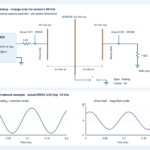 Keep three copper plates fixed and change the middle screen’s ground link. Measure capacitive pickup with a source-zero blank, a declared resolution floor and restoration.
- Measure the TMUX1101 Opening Kick at Two Hold Capacitances
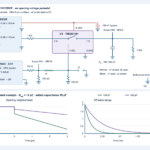 Compare a TMUX1101 opening pedestal with two hold capacitors. Fit the off-state decay to estimate effective capacitance and charge, with pickup and restoration checks.
- Measure Real Power and Returned Energy in an RC Load
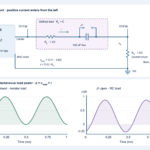 Measure a series RC load with two grounded scope channels. Calculate real and apparent power, then integrate the energy entering and leaving the load each cycle.
- Carry and Signed Overflow in a CD74HC283 Adder
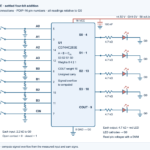 Build a four-bit CD74HC283E adder and decode measured pin voltages. Exercise carry-in and distinguish unsigned carry from signed two’s-complement overflow.
- Swap Two Coax Cables to Separate Cable Delay From Scope Path Bias
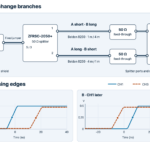 Split one square-wave edge into two scope channels, swap short and long coax cables, and use two signed delays to separate cable delay from path bias.
- Measure How Two Schottky Diodes Hand a Load From One Source to Another
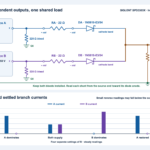 Use two Schottky diodes to feed one load from two sources. Read signed shunt voltages to see when one source dominates and when both supply current.
- Why One Sine Wave Appears in Several FFT Bins
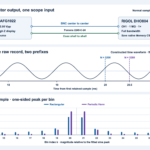 Compare rectangular and Hann windows on the same 1 kHz sine. Change only the crop length to see spectral leakage and amplitude loss.
- Swap Two Capacitors to Change the Damping of a Sallen–Key Filter
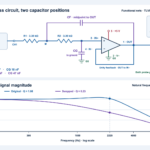 Build a TLV9001 Sallen–Key low-pass filter and swap two capacitors. Compare gain and phase while the calculated natural frequency stays the same.
- Make a 2N3904 Switch Turn Off Sooner With a Schottky Clamp
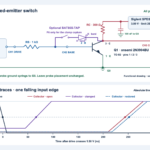 Compare a 2N3904 switch before and after fitting a Schottky clamp. Measure two turn-off delays and the cost in collector low voltage.
- Measure Diode Reverse Leakage Against an Empty Fixture
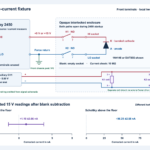 Compare 1N4148 and BAT85S reverse currents at 5 V and 15 V using two empty-fixture controls, a 10 MΩ reference and a complete Python analyzer.
- Use Relay Pickup and Dropout to Measure Coil Holding Power
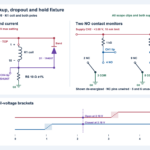 Bracket TQ2-5V pickup and dropout, revisit the same coil voltage from two states, and compare steady coil power with a shunt.
- MAX7400: Move a Low-Pass Filter’s Edge With Its Clock
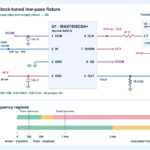 Change the MAX7400 clock from 50 to 200 kHz and back, then measure how much of the same 1 kHz tone reaches the output.
- Use Peak Detect to Find the Pulse a Coarse Scope Trace Can Miss
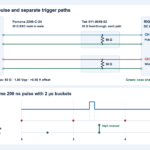 Verify a 200 ns pulse using a dense capture, compare Normal and Peak acquisitions in the same overview, then model point picks and extrema.
- Stop an Op-Amp Integrator From Drifting With a Feedback Resistor
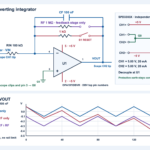 Measure how a +20 mV input offset makes a 25 Hz triangle drift, then add a 1 MΩ feedback resistor and verify where the OPA197 output settles.
- Measure What the Scope’s 20 MHz Limit Does to a Rising Edge
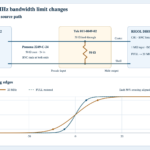 Keep a terminated scope input fixed and measure how its 20 MHz bandwidth limit changes 10–90% rise time across nine raw captures.
- Move a Coax Stub Notch by Doubling Its Length
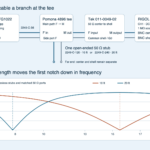 Use two open coax stubs to move a notch. Sweep both lengths, normalize against no-stub controls, and check where the longer stub passes the signal.
- Reduce LM334 Current Drift With a Diode
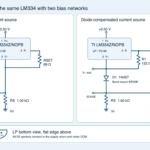 Build an LM334 current source and measure its temperature drift. Add one resistor and a 1N457 diode, then repeat the same room-to-warm test.
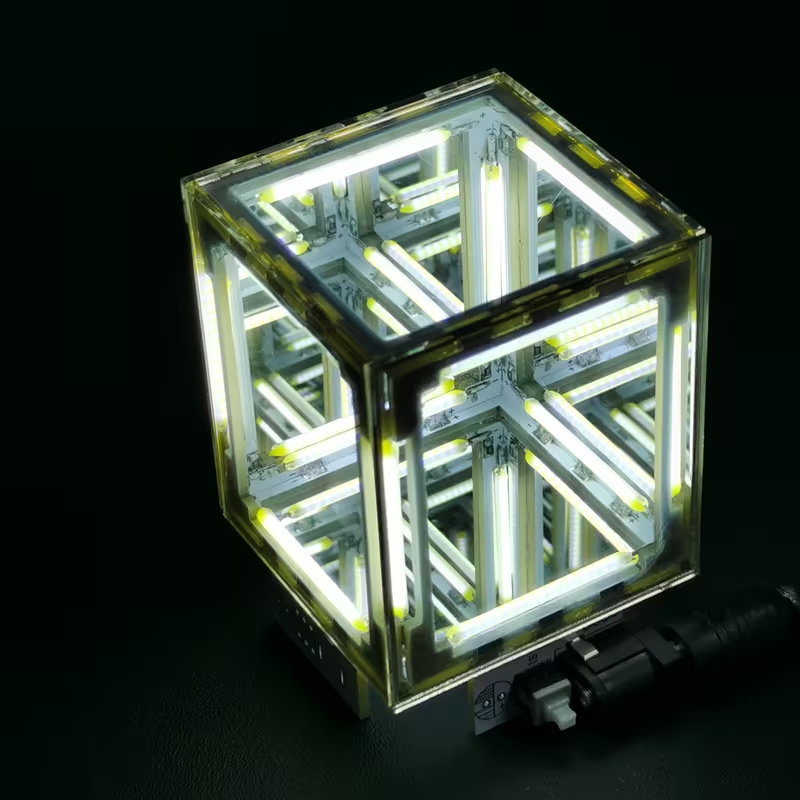
Temu affiliate offer · Project idea
Build an infinity light cube
Listing specifies 5-volt direct current. Soldering required; battery and glue not included.