
A capacitor is an electronic component that stores and releases electrical energy in a circuit. It consists of two conductive plates separated by an insulating material (dielectric). Capacitors are widely used for energy storage, filtering, signal processing, and power regulation.

📜 History of Capacitors
1️⃣ Early Discoveries (1745-1746)
- The first capacitor, called the Leyden Jar, was invented by Pieter van Musschenbroek and Ewald Georg von Kleist.
- It was a glass jar with metal foil inside and outside, used to store electric charge.
2️⃣ 19th Century Advancements
- Michael Faraday (1830s) made significant contributions to capacitor theory, leading to the unit Farad (F) being named after him.
- Early capacitors were used in telegraphy and early electrical circuits.
3️⃣ 20th Century Developments
- Paper, ceramic, and electrolytic capacitors were developed for use in radios, power supplies, and industrial electronics.
- Solid-state capacitors emerged for modern computers and high-frequency circuits.
4️⃣ Modern Capacitors (21st Century)
- Supercapacitors and graphene-based capacitors now provide high energy storage for renewable energy systems, electric vehicles, and high-speed electronics.
🔹 Types of Capacitors & Their Applications
1️⃣ Ceramic Capacitors

📌 Purpose: Used for high-frequency applications, filtering, and bypassing noise.
📌 Example: MLCC (Multilayer Ceramic Capacitors)
✅ Applications:
- Smartphones, computers, and RF circuits.
- Decoupling capacitors in microcontrollers (Arduino, ESP32).
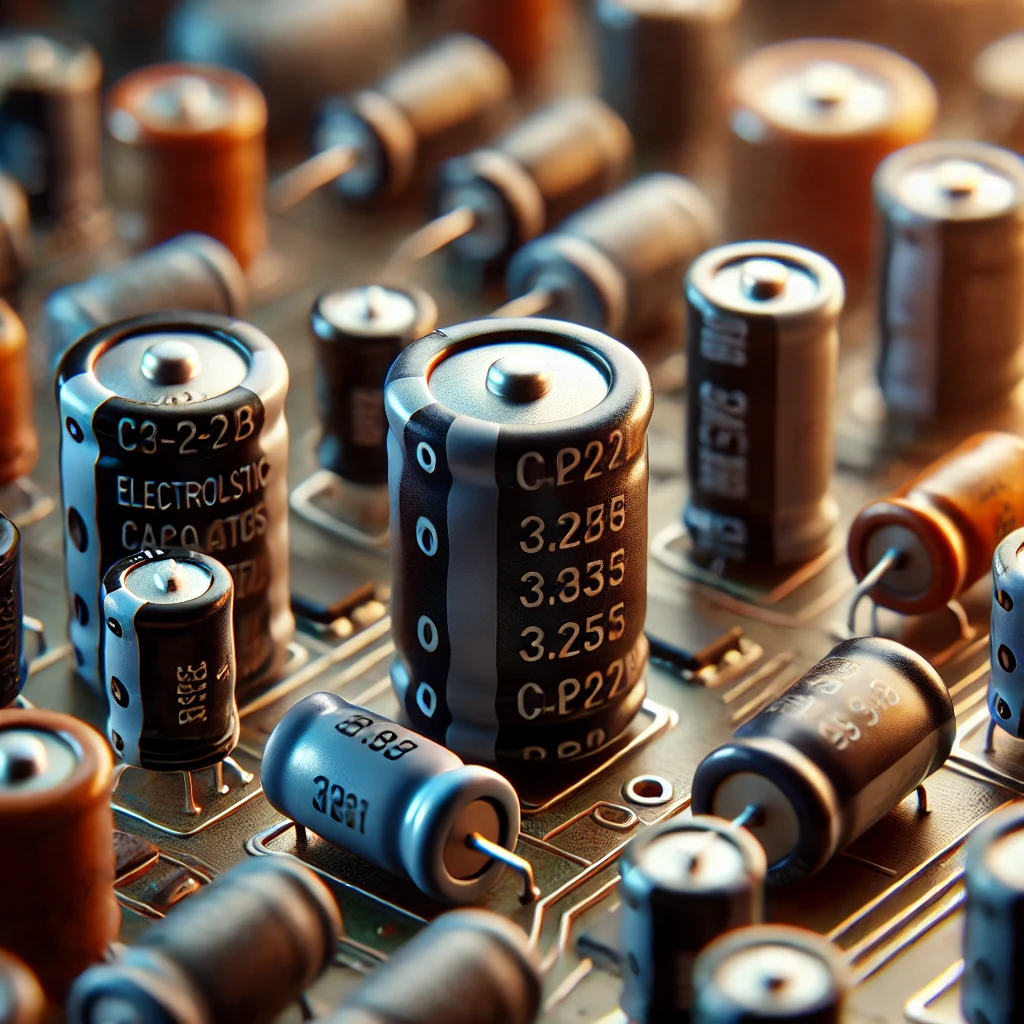
2️⃣ Electrolytic Capacitors

📌 Purpose: Provides high capacitance for energy storage and filtering.
📌 Example: Aluminum & Tantalum Capacitors
✅ Applications:
- Power supply filtering (reduces AC ripple).
- Audio amplifiers (stabilizing signal fluctuations).
3️⃣ Film Capacitors

📌 Purpose: Used for AC applications and noise suppression.
📌 Example: Polyester and Polypropylene Film Capacitors
✅ Applications:
- Motor control circuits (AC motors, fans).
- High-voltage applications (X/Y safety capacitors).
4️⃣ Supercapacitors (Ultracapacitors)

📌 Purpose: Provides fast energy storage and discharge.
📌 Example: Graphene-based Supercapacitors
✅ Applications:
- Electric vehicles (EVs) and hybrid cars.
- Solar energy storage and regenerative braking systems.
5️⃣ Variable Capacitors

📌 Purpose: Used in tuning and frequency control.
📌 Example: Air-gap Capacitors, Trimmer Capacitors
✅ Applications:
- Radio tuning circuits.
- Antenna matching networks (ham radios, RF circuits).
🔹 Applications of Capacitors
1️⃣ Energy Storage & Power Supply Filtering
✅ Examples:
- Backup power for memory (RAM, RTC in computers).
- Smoothing voltage in AC-DC power supplies.
✅ Example Circuit:
AC Source → [Bridge Rectifier] → Capacitor → DC Output
- Capacitor smooths voltage fluctuations.
2️⃣ Signal Processing & Audio Circuits
✅ Examples:
- Coupling and decoupling signals in audio amplifiers.
- Removing noise from power lines in amplifiers.
✅ Example Circuit:
Audio Input → [Capacitor] → Amplifier → Speaker
- Blocks DC and passes AC (audio signal).
3️⃣ Motor Starters & AC Applications
✅ Examples:
- Single-phase motors (starting and running capacitors).
- Power factor correction in industrial AC systems.
✅ Example Circuit:
AC Motor → [Capacitor] → Power Supply
- Improves efficiency and torque in motors.
4️⃣ Timing Circuits & Oscillators
✅ Examples:
- 555 Timer circuits for LED blinkers, frequency generators.
- Clock circuits in microcontrollers (RC oscillators).
✅ Example Circuit:
555 Timer → [Capacitor] → LED Blinker
- Controls the blinking speed.
5️⃣ Wireless & RF Circuits
✅ Examples:
- Tuning circuits in radios and antennas.
- Filtering signals in mobile phones and communication systems.
✅ Example Circuit:
Antenna → [Variable Capacitor] → RF Receiver
- Adjusts frequency reception in radios.
🔹 Summary of Capacitor Types & Applications
| Type of Capacitor | Function | Example Uses |
|---|---|---|
| Ceramic Capacitor | High-frequency, filtering | Microcontrollers, RF circuits |
| Electrolytic Capacitor | Energy storage, filtering | Power supplies, audio amps |
| Film Capacitor | AC applications, noise suppression | Motors, high-voltage circuits |
| Supercapacitor | Fast energy storage | Electric vehicles, solar energy |
| Variable Capacitor | Frequency tuning | Radios, antenna matching |
⚡ Conclusion
Capacitors play a vital role in power management, signal processing, and electronic circuit design. From small mobile phones to large power grids, capacitors ensure smooth electrical operation and efficiency.