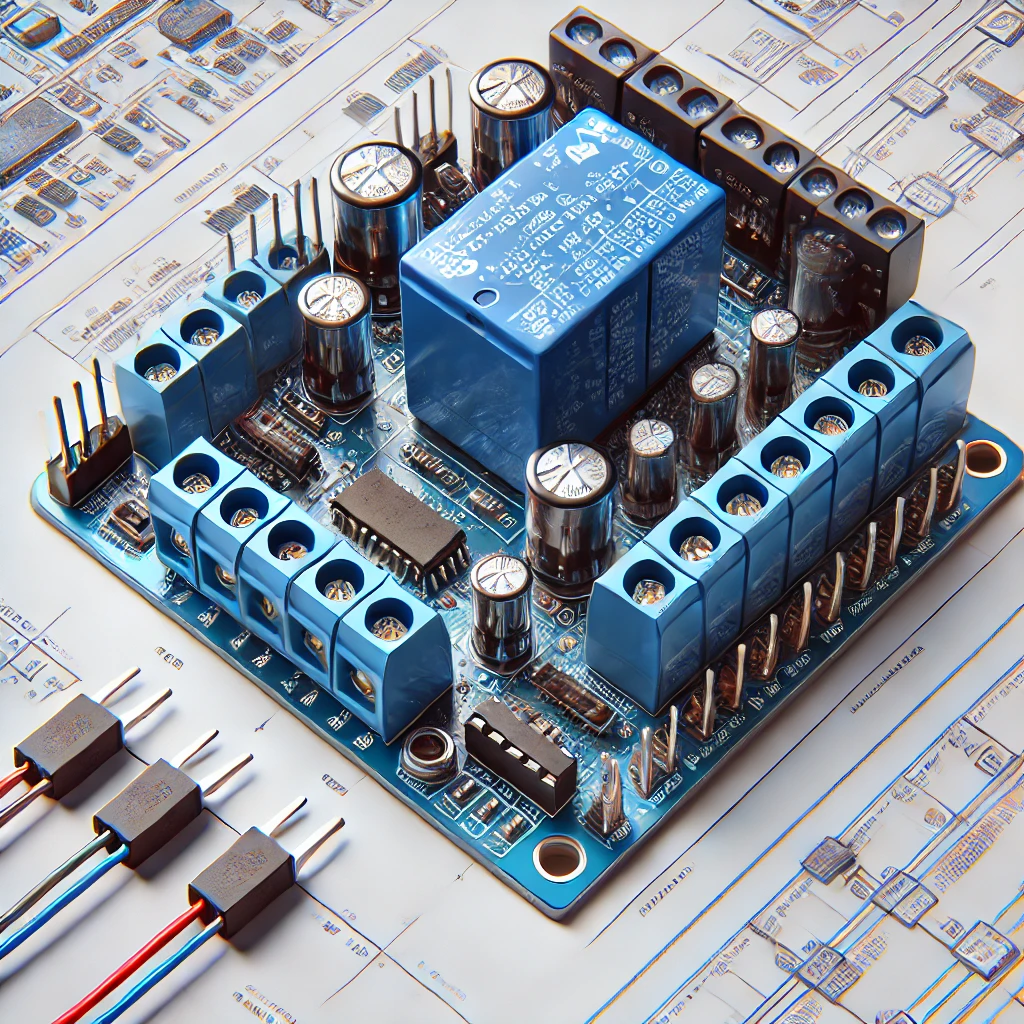
A relay is an electromechanical switch that allows low-power signals to control higher-power circuits. It consists of an electromagnet, contacts, and a spring mechanism. When current flows through the electromagnet, it generates a magnetic field that pulls the switch to change the state of the relay, allowing one circuit to control another, often with different voltage and current levels.

🔹 History of Relays
- 19th Century: In 1835, Joseph Henry invented the electromagnetic relay.
- Late 1800s: Relays began to be used in telegraph systems and telecommunication for long-distance signaling.
- 20th Century: Relays became key components in automation systems and electrical control panels.
🔹 Types of Relays
- Electromagnetic Relay
The traditional relay, using an electromagnet to operate mechanical switches.
Applications:- Household appliances
- Industrial machinery
- Control systems
- Solid-State Relay (SSR)
A relay using semiconductor components (such as triacs or thyristors) instead of mechanical parts. These are faster, quieter, and more durable than traditional relays.
Applications:- High-speed switching
- Medical equipment
- Automated systems
- Thermal Relay
A relay that uses a bimetallic strip that bends due to heating caused by excessive current, which activates the switch.
Applications:- Overcurrent protection
- Motor protection circuits
- Reed Relay
A type of electromagnetic relay using reed switches that open or close in response to a magnetic field.
Applications:- Small devices like phones and computers
- Sensor circuits
- Low-power control systems
- Time Delay Relay
A relay that delays activation or deactivation of a circuit for a preset time.
Applications:- Lighting systems
- Timing circuits
- Motor control
- Latching Relay
A relay that retains its position (either open or closed) after the activation signal is removed.
Applications:- Memory circuits
- Bistable systems
- Energy-efficient control
🔹 Examples of Relay Applications
- Home Automation Systems
- Relays can control lights, fans, and other devices remotely via an automation controller.
- Automotive Systems
- Relays control headlights, fuel pumps, and electric windows in vehicles.
- Industrial Equipment
- Relays control motors, heaters, and sensors in automated factories, ensuring safe operation and automatic switching.
- Telecommunication
- In telephone exchanges, relays were historically used to switch circuits automatically, ensuring communication without manual intervention.
- Circuit Protection
- In power systems, relays protect against overcurrent or overvoltage conditions, automatically disconnecting the faulty part of the circuit.
- Control Systems
- Relays allow microcontrollers to interface with high-power loads, such as motors, solenoids, and lights, which they cannot directly control.
🔹 How a Relay Works in Practice:
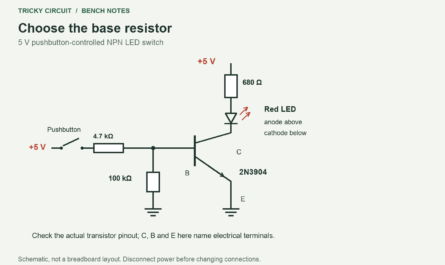
Imagine you have a microcontroller that can only output a low voltage (e.g., 3.3V or 5V), and you want to control a large motor or a high-voltage lightbulb. You can’t directly connect the microcontroller to the motor because the voltage and current are too high. Here, a relay allows you to use the low-power output from the microcontroller to activate the relay, which then switches the high-power circuit (motor/lightbulb) on or off.
🔹 Conclusion
Relays are essential components in electrical and electronic control systems, enabling low-power devices to control high-power ones, making them indispensable in home appliances, industrial automation, and automotive applications.