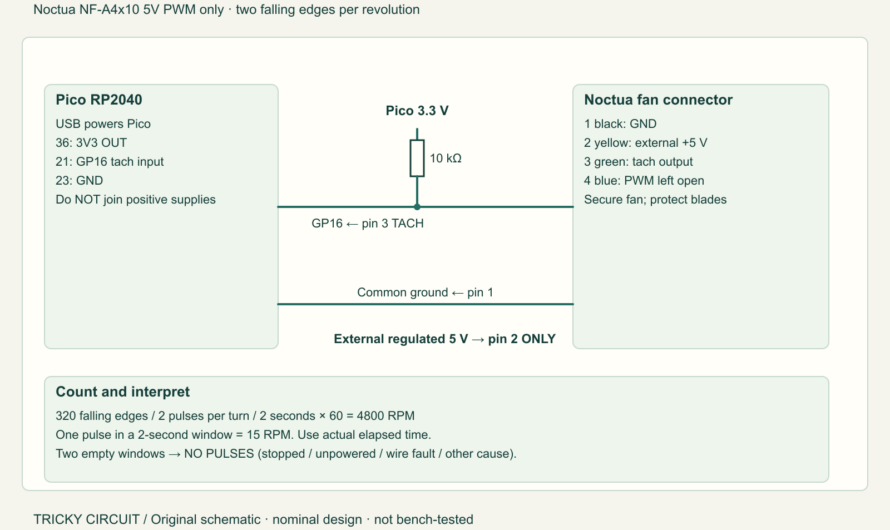
Pico Fan Tachometer: Count Pulses Without Guessing the Interface
Read the documented tach output of a 5 V Noctua fan with a Pico. Calculate RPM from two pulses per revolution and distinguish no pulses from a diagnosed stall.
Unravel the Mystery of Electronics
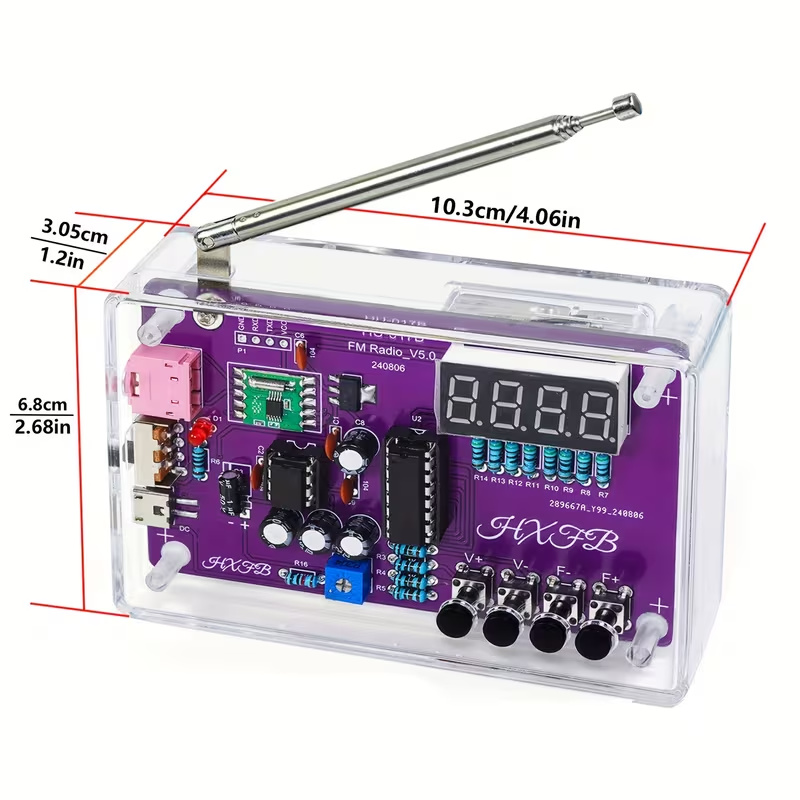
Soldering required. Check the supplied parts and board revision.
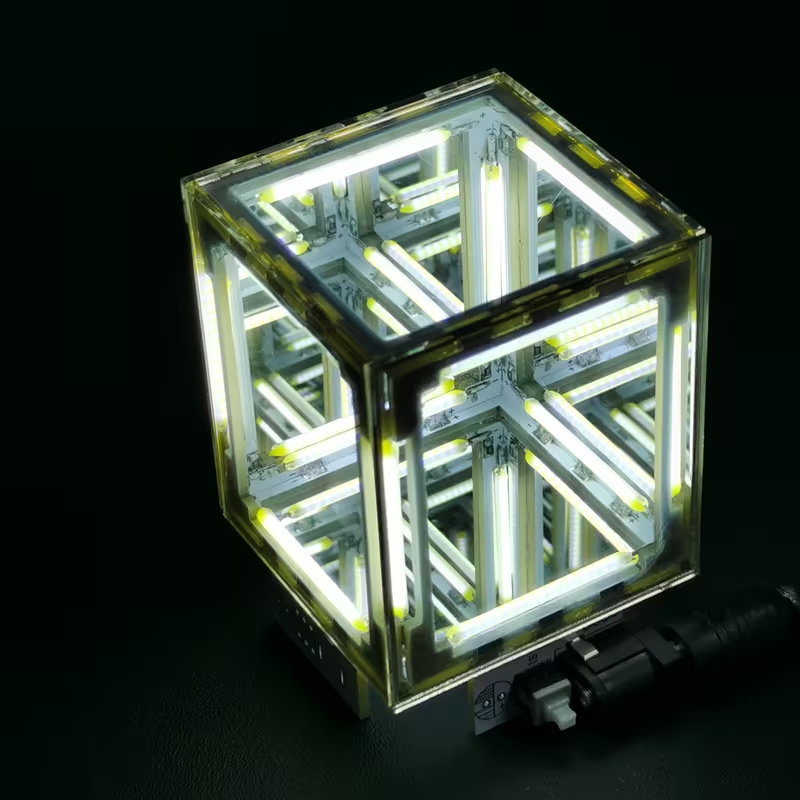
Listing specifies 5-volt direct current. Soldering required; battery and glue not included.
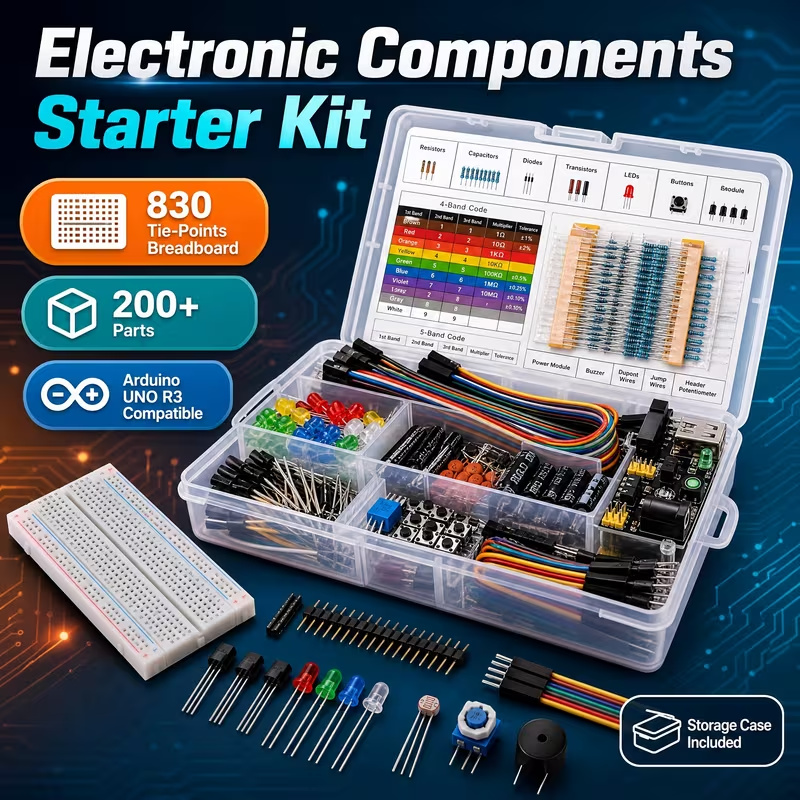
Breadboard, wires and assorted parts. Arduino controller board not included.
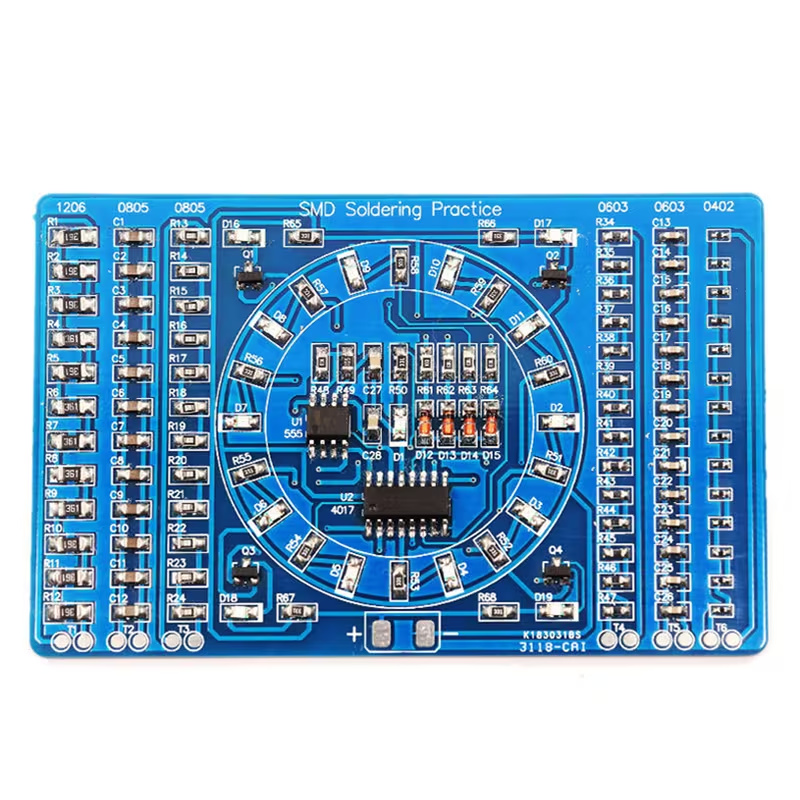
Surface-mount soldering practice. Battery and battery holder not included.
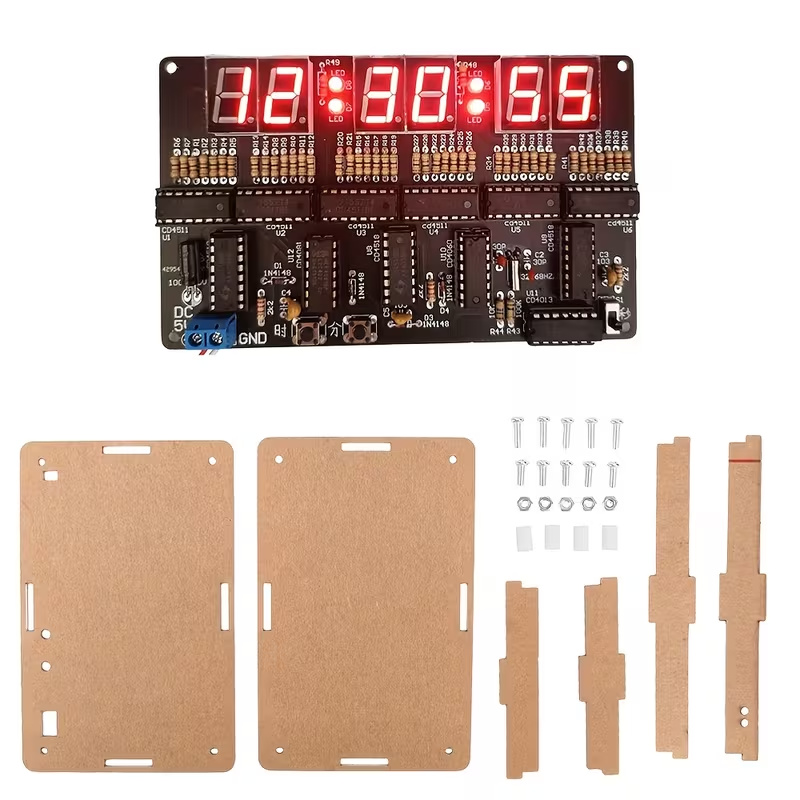
Clock-and-case project kit. Soldering required; check included parts and power requirements.
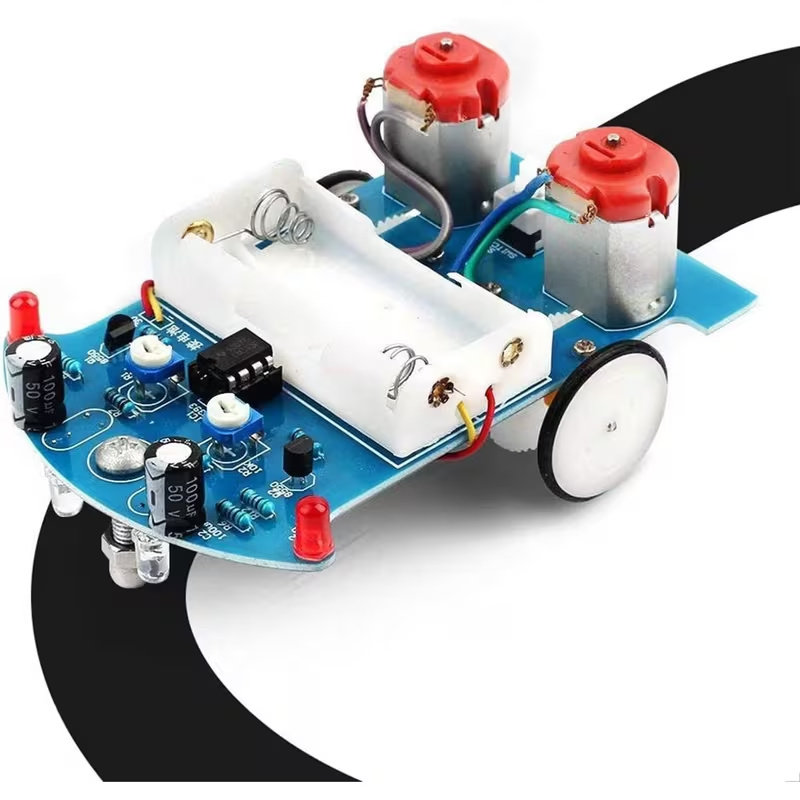
Soldering and assembly required. Check battery and track requirements before buying.
Tricky Circuit may earn a commission through these links. Product ideas have not been bench-tested by Tricky Circuit and are not verified lesson parts lists.
Read the documented tach output of a 5 V Noctua fan with a Pico. Calculate RPM from two pulses per revolution and distinguish no pulses from a diagnosed stall.
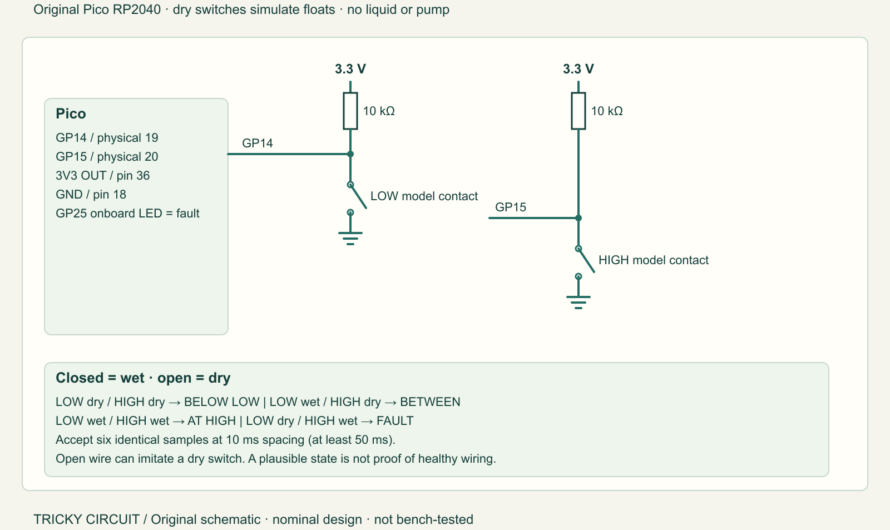
Model low and high float contacts with two switches. Debounce the pair, display three plausible tank levels and flag the impossible combination before adding any actuator.
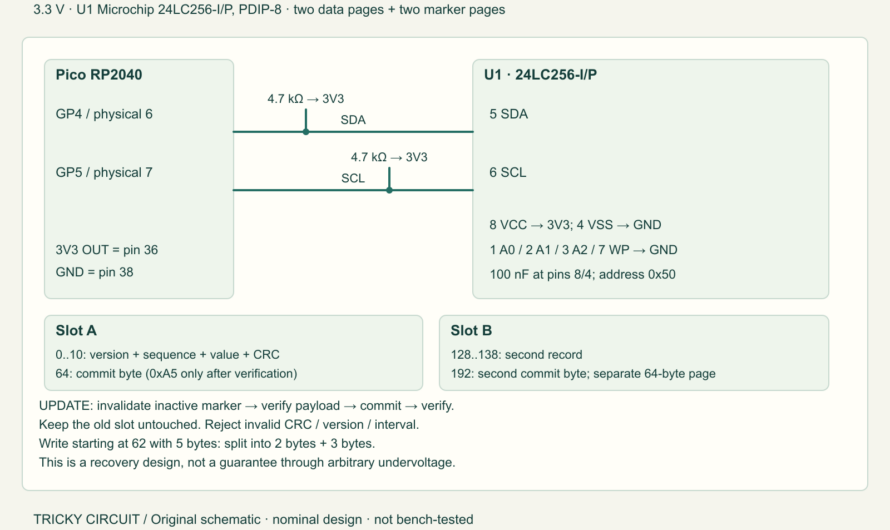
Save one setting in two versioned EEPROM records. Split writes at page boundaries, verify data and recover an older record after an incomplete update.
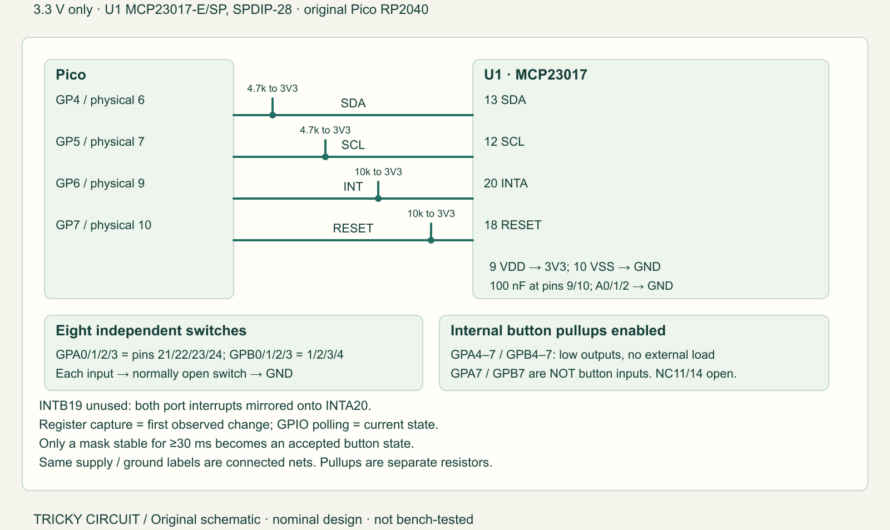
Connect eight buttons to an MCP23017, read captured changes and reconcile the current state. Avoid its output-only pins and distinguish capture from debouncing.
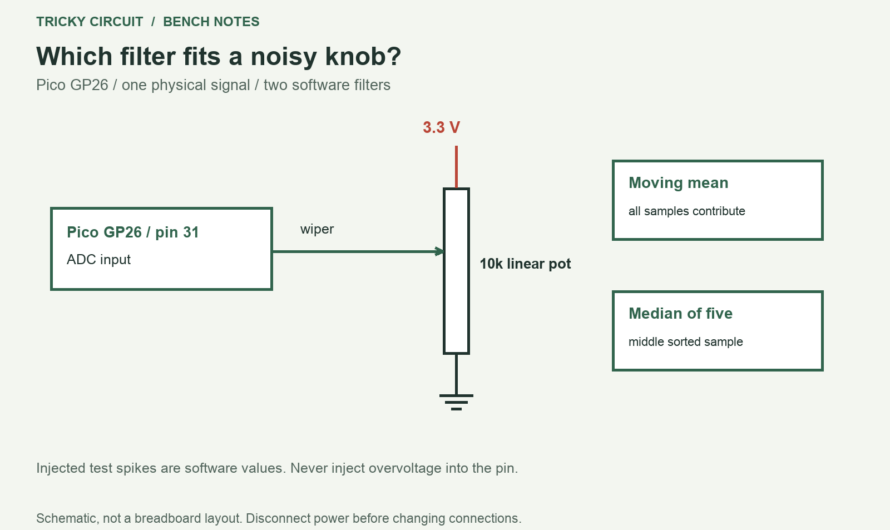
Compare raw, mean and median readings from a Pico potentiometer. Inject labeled software spikes and measure the smoothing-versus-response tradeoff.
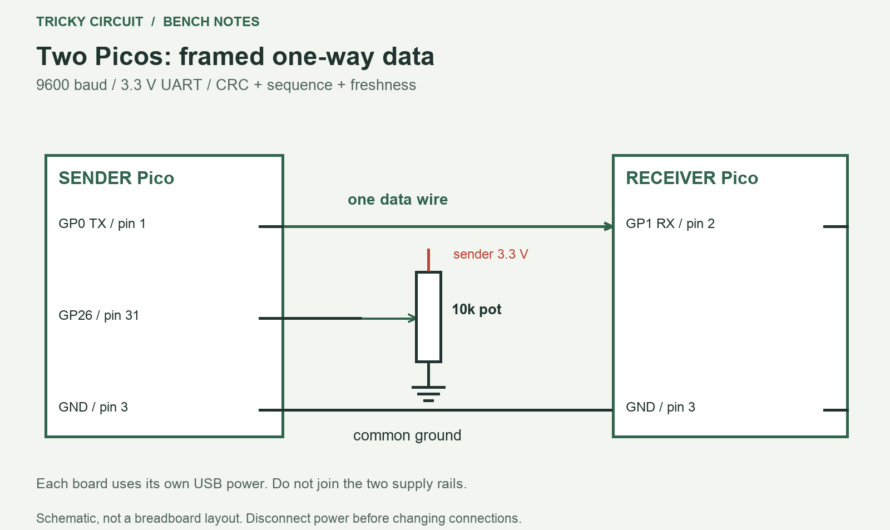
Connect two Pico boards with a one-way UART link. Send framed readings with CRC-16, reject damaged messages and show when data stops arriving.
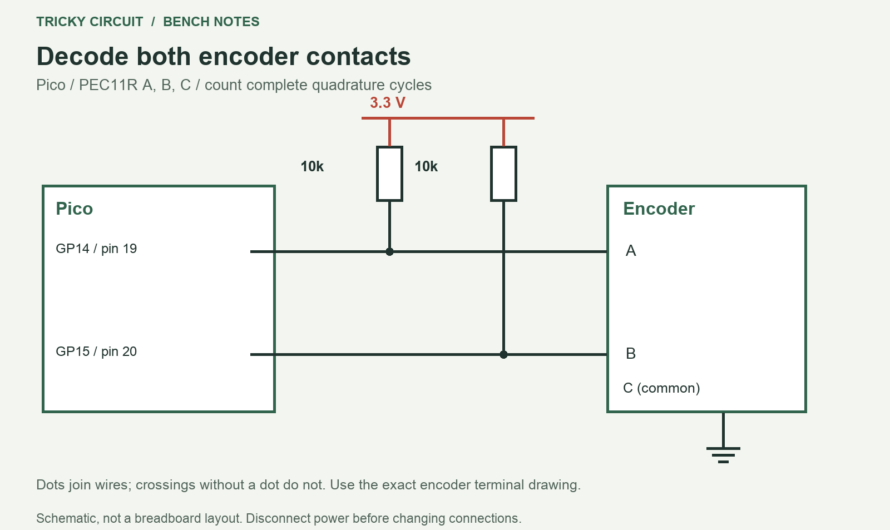
Decode a mechanical rotary encoder with Pico using a quadrature transition table. Count complete cycles, reject impossible jumps and expose missed edges.
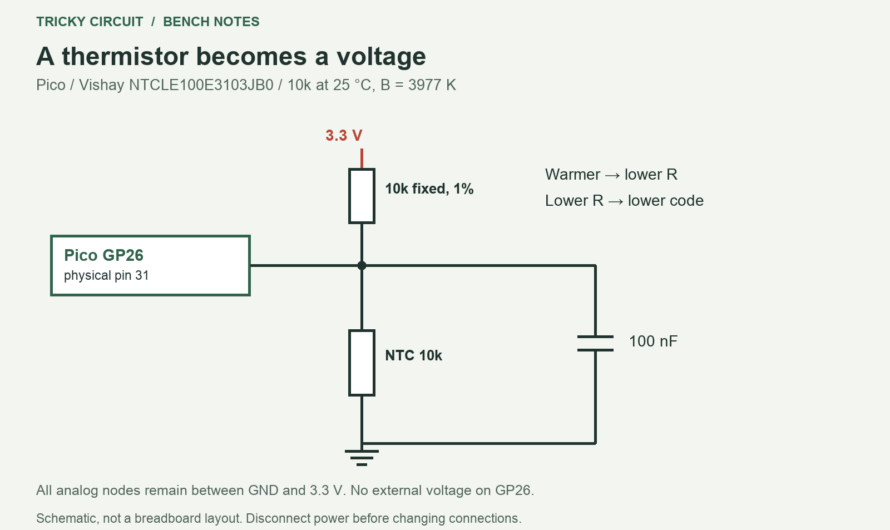
Read a 10 kΩ NTC thermistor with Pico. Derive resistance from a divider, estimate temperature and recognize open-circuit and short-circuit readings.
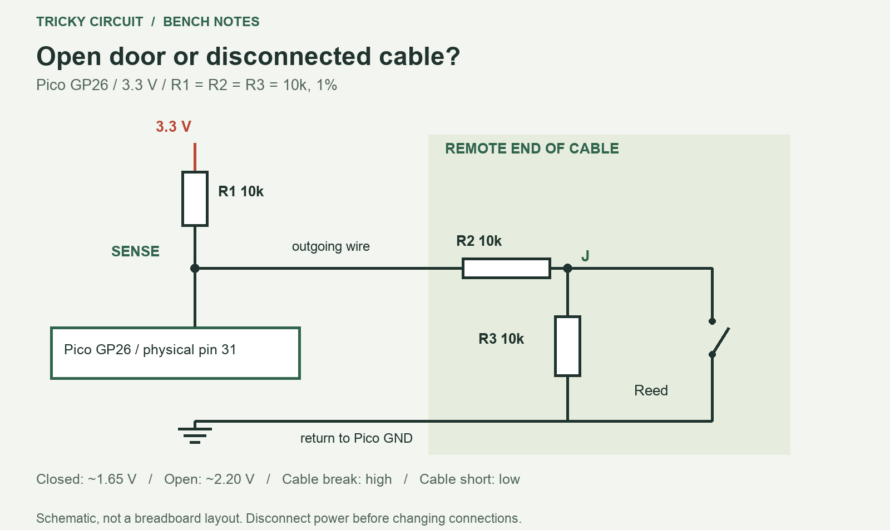
Use a Pico analog input and three resistors to distinguish a closed contact, open contact, short and disconnected cable. Includes fault-injection tests.
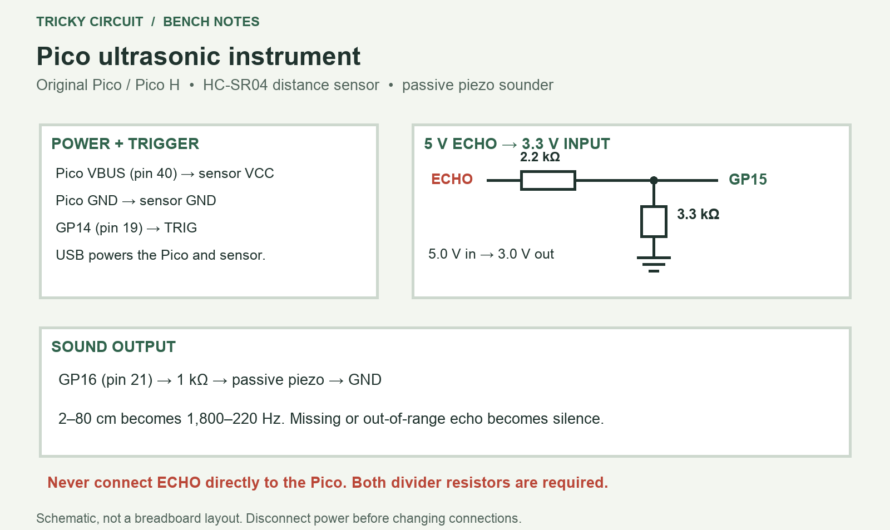
Turn distance into sound with a Raspberry Pi Pico and HC-SR04. Build the echo divider and explore pulse timing and PWM with full MicroPython code.
Explore these do-it-yourself project kits. Check the selected option, included parts and instructions on each offer.
Tricky Circuit may earn a commission if you buy through these Temu affiliate links. These are product ideas; they have not been bench-tested by Tricky Circuit and are not verified lesson parts lists.
Supplier product photo
Soldering required. Check the supplied parts and board revision.
Supplier product photo
Listing specifies 5-volt direct current. Soldering required; battery and glue not included.
Supplier product photo
Breadboard, wires and assorted parts. Arduino controller board not included.
Supplier product photo
Surface-mount soldering practice. Battery and battery holder not included.
Supplier product photo
Clock-and-case project kit. Soldering required; check included parts and power requirements.
Supplier product photo
Soldering and assembly required. Check battery and track requirements before buying.