Pot Drainage: Weigh the Water That Leaves Before Calling It Dry-Back
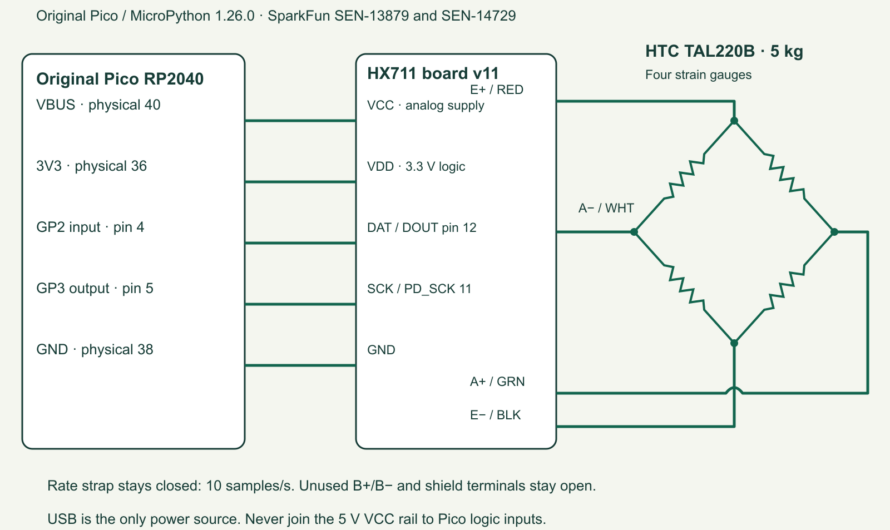
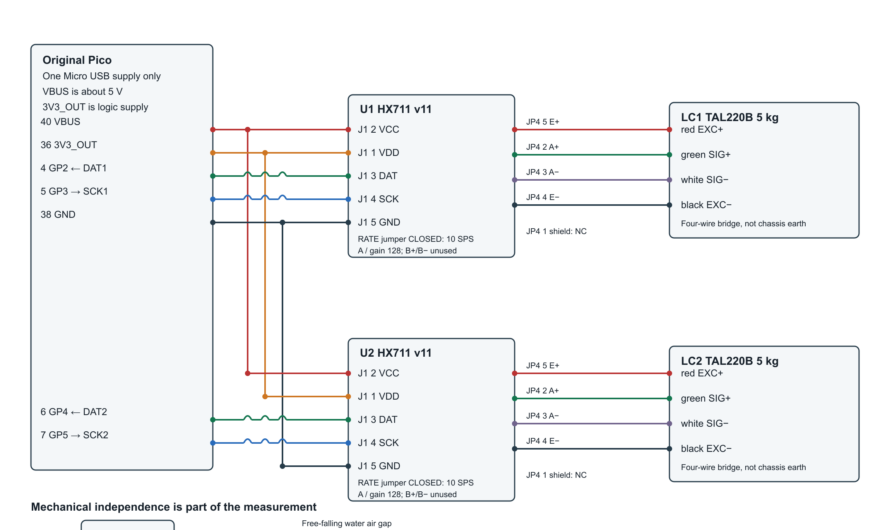
Weigh a pot and its drainage collector on independent HX711 platforms. Use separate calibration and observed read windows to distinguish compatible transfer from unknown loss.
Unravel the Mystery of Electronics
Weigh a pot and its drainage collector on independent HX711 platforms. Use separate calibration and observed read windows to distinguish compatible transfer from unknown loss.
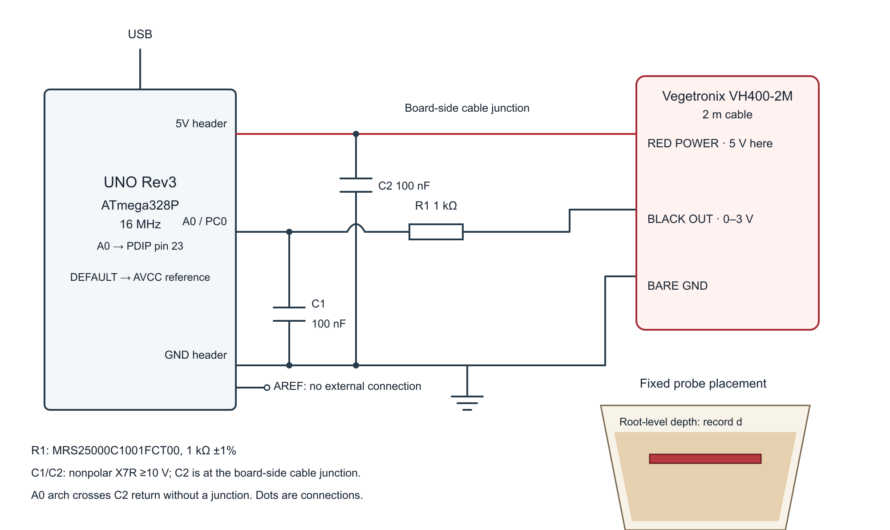
Log a VH400-2M with an original UNO, mark watering and gaps, and fit voltage trends only within qualified intervals using actual elapsed timestamps.
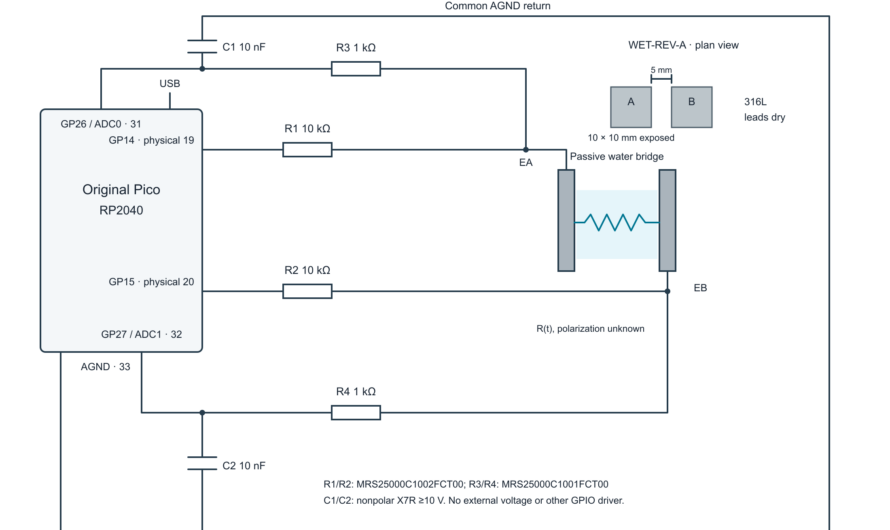
Compare two water-probe polarities with a finite Pico capture, retain raw ADC readings, and calculate a signed late-window proxy without claiming total charge.
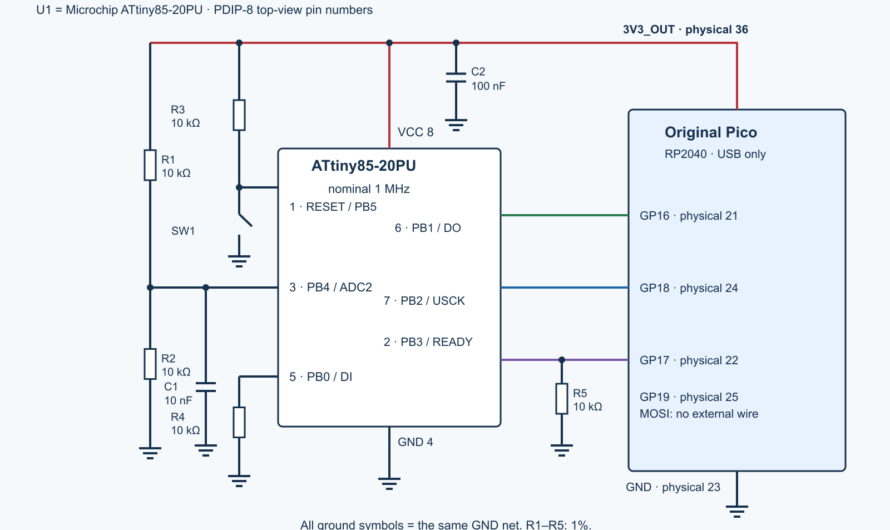
Compare active–quiet–active ADC blocks on an ATtiny85, transfer data afterward, and separate code spread from accuracy with complete firmware and a Pico collector.
Build an HX711 and TAL220B scale lab on Pico. Keep tare and span calibration separate, refuse unstable windows and preserve drift instead of automatically zeroing it.
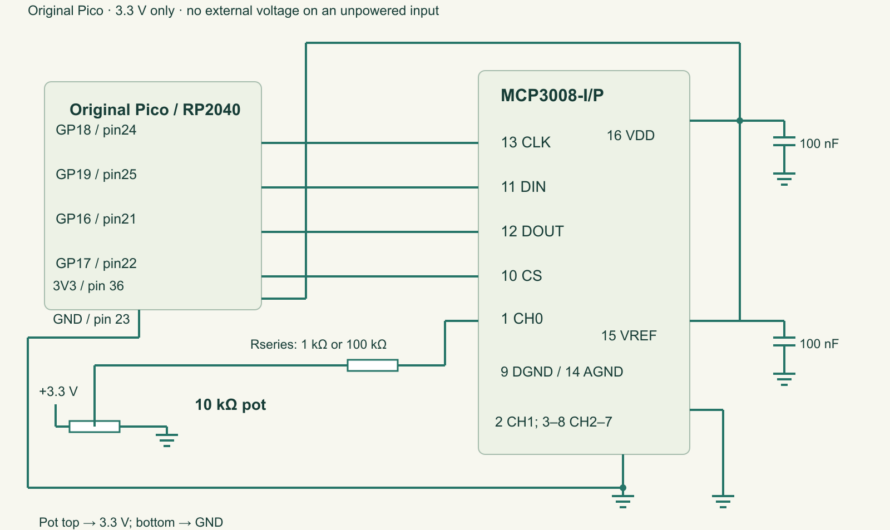
Read an MCP3008 with a Pico, compare first and repeated samples, and learn why a slow print loop cannot fix a high-resistance source during acquisition.
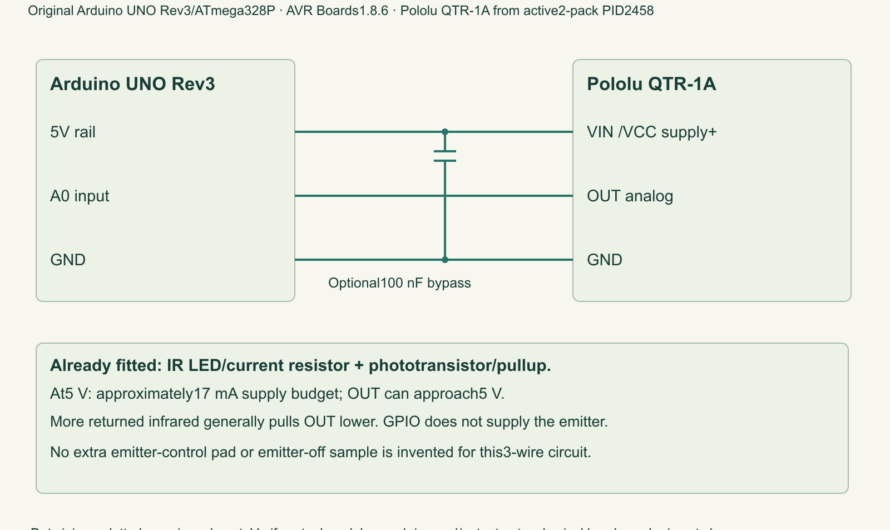
Test QTR-1A materials at3–6mm with full UNO code. Compare complete sample windows, reject weak calibration and bracket each reading with a reference before assigning a label.
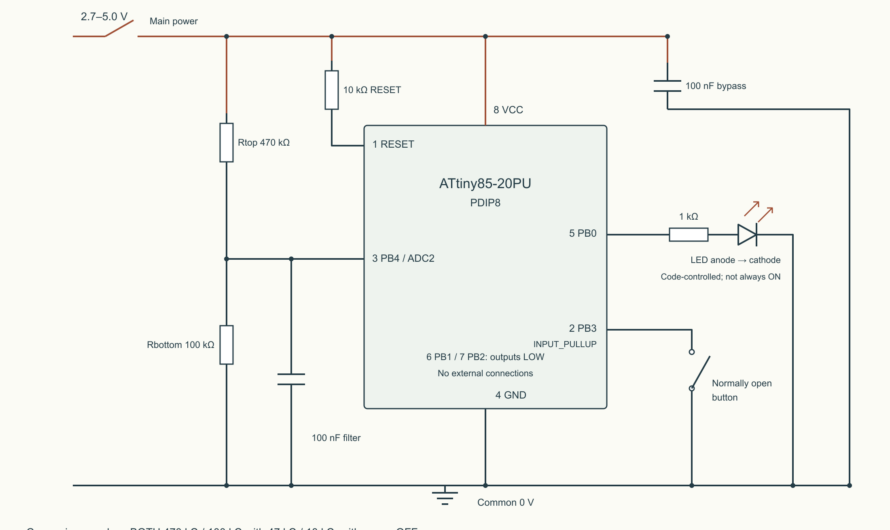
Compare two ATtiny85 battery dividers with the same ratio and tenfold different drain. Learn the VCC-reference trap, source impedance and per-unit calibration with full AVR C.
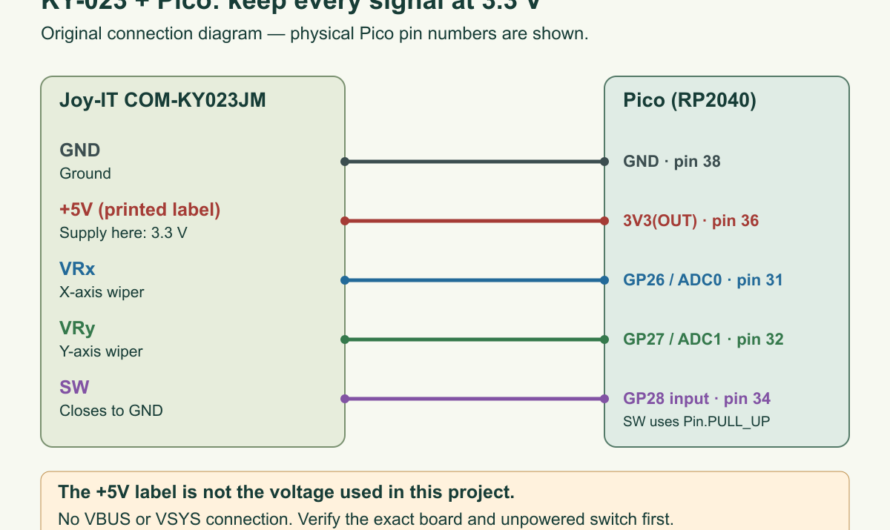
Measure a joystick’s real center and travel. Wire a Joy-IT KY-023 to Pico at 3.3 V, add a dead zone and count clean button presses with complete Python code.
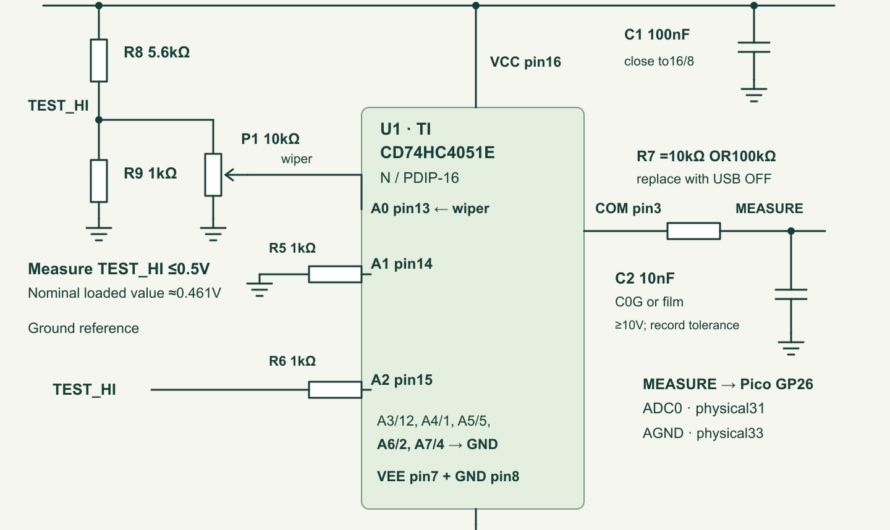
Explore a Pico analog multiplexer with a controlled low-voltage step, compare source resistance and dwell, and preserve channel identity and stale-reading status.