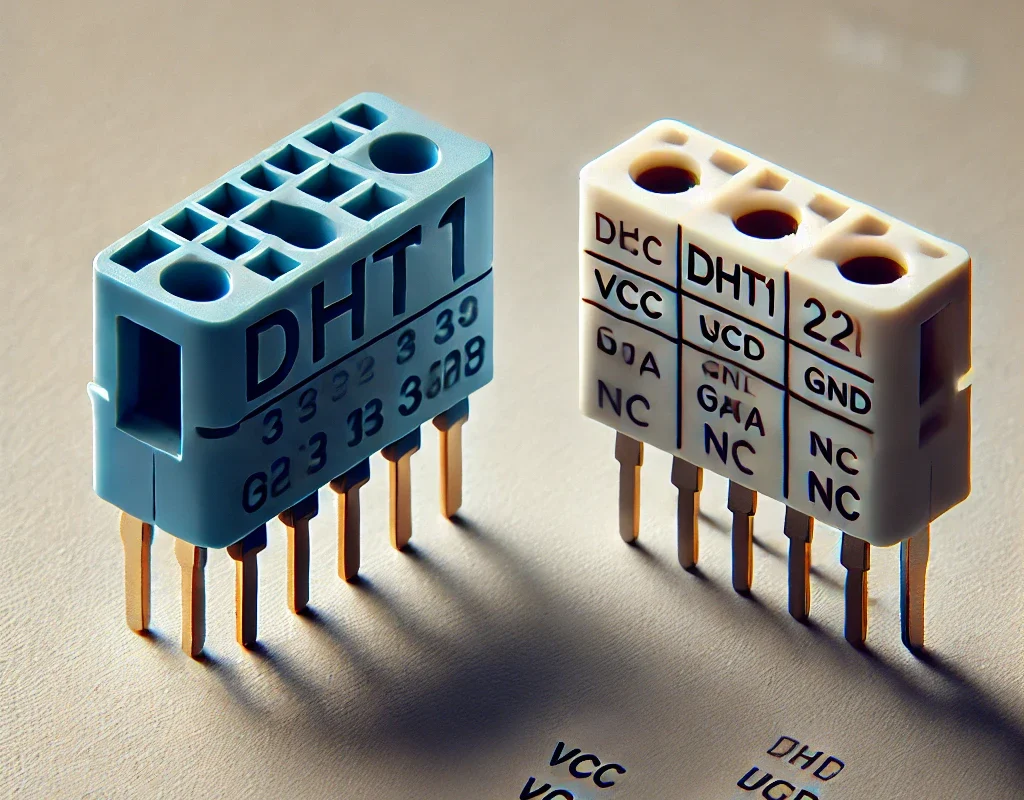
The DHT11 sensor has a listed accuracy of:
- ±2°C for temperature
- ±5% for humidity
This means that any reading you collect can vary within this range, affecting the reliability of your data. Let’s break down how this impacts real-world applications. 🚀
⚡ 1. Temperature Accuracy (±2°C)
🔹 What It Means?
If the DHT11 reports 25°C, the actual temperature could be anywhere between:
23°C to 27°C
This 2-degree margin of error may not seem like much, but for precise applications, it can be a problem.
🔹 How It Affects Different Applications?
✅ General Room Monitoring: No big deal; a 2°C difference won’t impact comfort.
❌ Precision Climate Control (e.g., Incubators, Labs): Too inaccurate! 2°C could be critical.
❌ Weather Monitoring: May not be reliable for scientific purposes.
🔹 How to Reduce Errors?
- Use an average of multiple readings to smooth out variations.
- Calibrate the sensor against a more accurate thermometer.
- Use a higher-accuracy sensor like DHT22 (±0.5°C) or BME280 (±0.25°C).
💧 2. Humidity Accuracy (±5%)
🔹 What It Means?
If the DHT11 reports 50% humidity, the actual value could be anywhere between:
45% to 55%
For applications requiring precise humidity control, this is a significant margin of error!
🔹 How It Affects Different Applications?
✅ General Home Monitoring: Fine for basic indoor humidity tracking.
❌ Greenhouses & Mushroom Farming: Small changes in humidity matter.
❌ Industrial Applications (e.g., Server Rooms, Pharmaceuticals): Requires better accuracy.
🔹 How to Reduce Errors?
- Use averaging to stabilize fluctuating values.
- Place the sensor away from heat sources or drafts.
- Upgrade to a DHT22 (±2% humidity) or SHT31 (±1.8%).
📊 3. Real-World Impact of DHT11 Accuracy
| Application | Effect of ±2°C & ±5%RH Error | Recommended Sensor? |
|---|---|---|
| Home Monitoring | Minimal impact | DHT11 is fine ✅ |
| DIY Weather Station | Moderate impact | Upgrade to DHT22 🔄 |
| Greenhouse Control | Can affect plant health | Use BME280 🌱 |
| Industrial Climate Control | Not suitable | Use SHT31 or SI7021 🏭 |
| Incubators & Labs | Critical errors possible | Use DHT22 or higher 📡 |
🚀 Conclusion – Is DHT11 Good Enough?
✅ DHT11 is OK for basic hobby projects like home monitoring and DIY weather stations.
❌ For precision applications, it’s not reliable enough – upgrading to DHT22, BME280, or SHT31 is better.