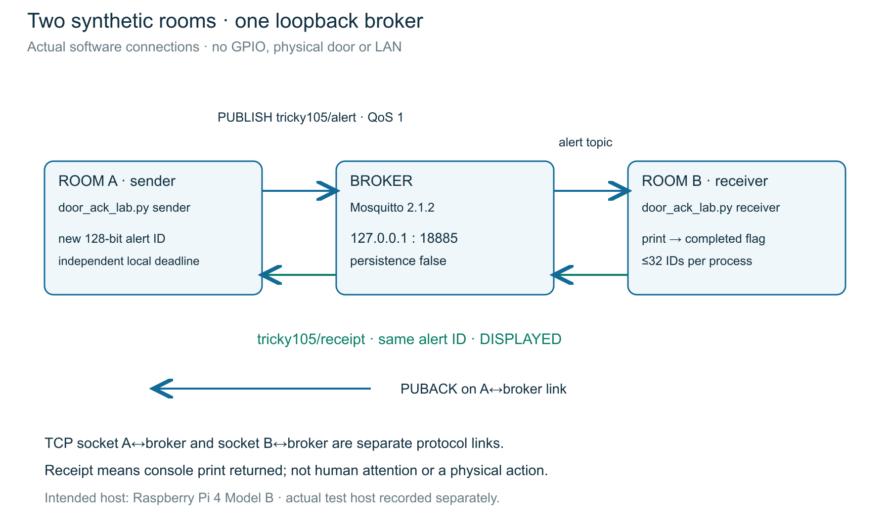
Multiroom Door Alerts: A PUBACK Is Not the Other Room’s Acknowledgement
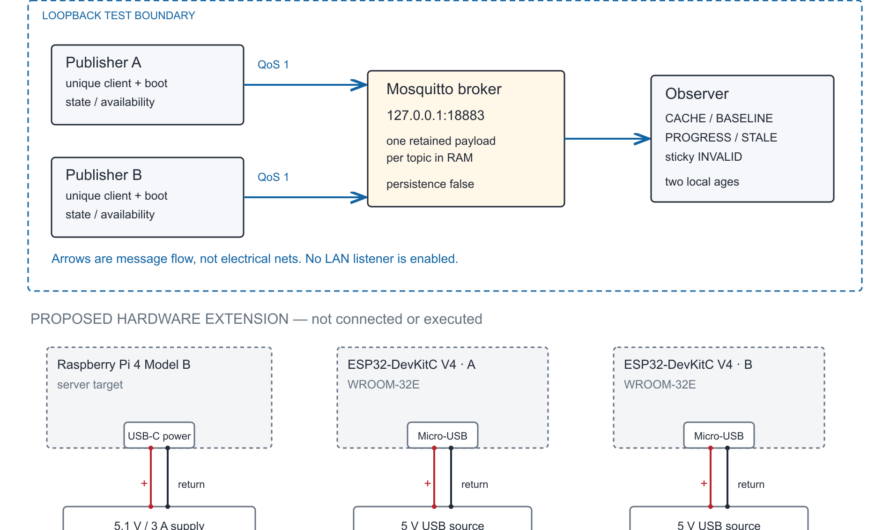
Run a loopback MQTT experiment that separates broker PUBACK from a correlated application receipt, then test late replies, duplicate IDs and receiver restart.
Unravel the Mystery of Electronics
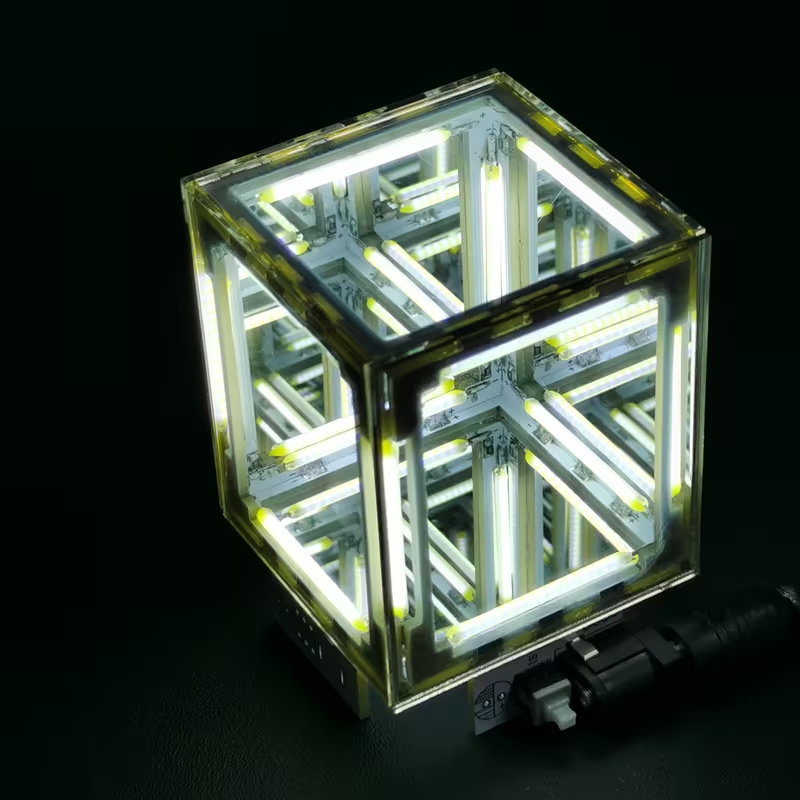
Listing specifies 5-volt direct current. Soldering required; battery and glue not included.
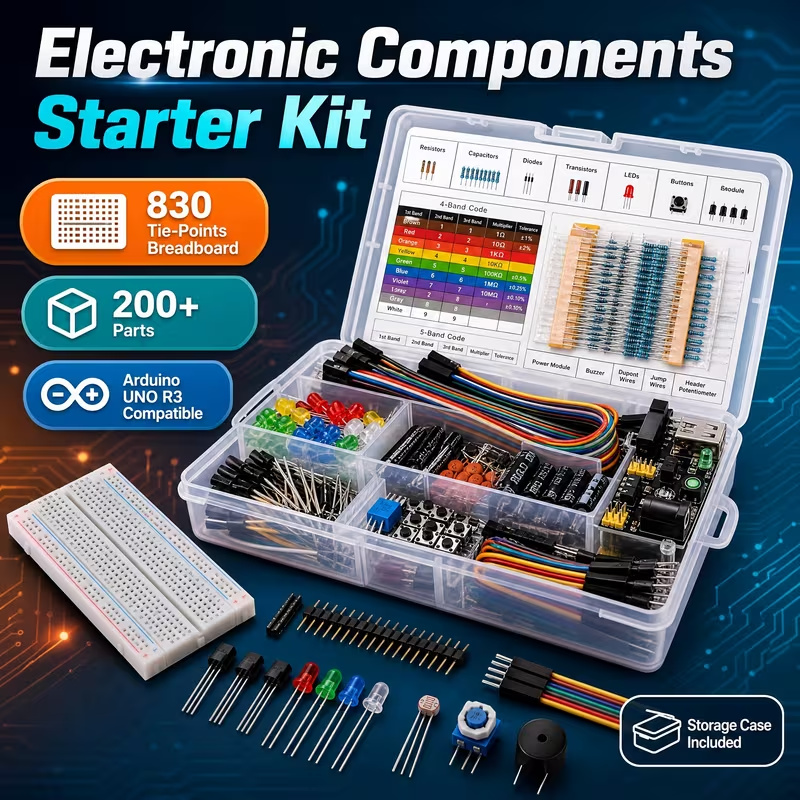
Breadboard, wires and assorted parts. Arduino controller board not included.
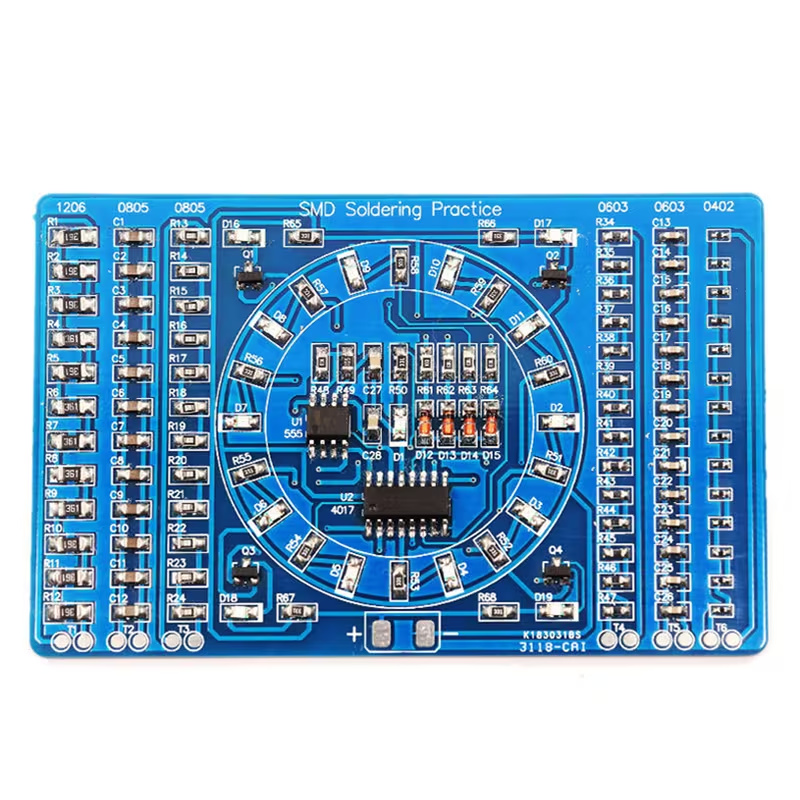
Surface-mount soldering practice. Battery and battery holder not included.
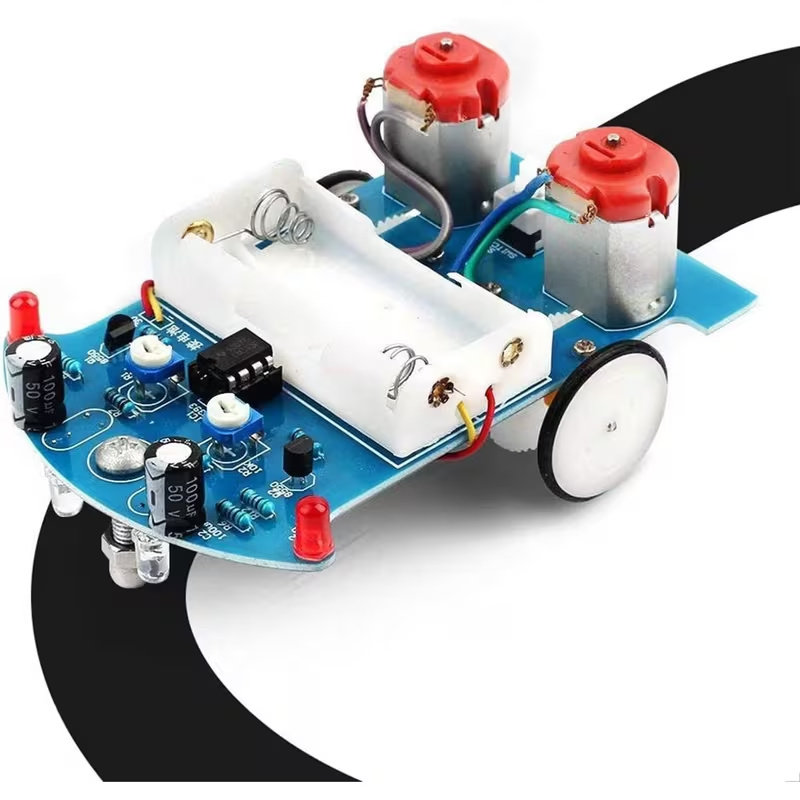
Soldering and assembly required. Check battery and track requirements before buying.
Tricky Circuit may earn a commission through these links. Product ideas have not been bench-tested by Tricky Circuit and are not verified lesson parts lists.
Run a loopback MQTT experiment that separates broker PUBACK from a correlated application receipt, then test late replies, duplicate IDs and receiver restart.
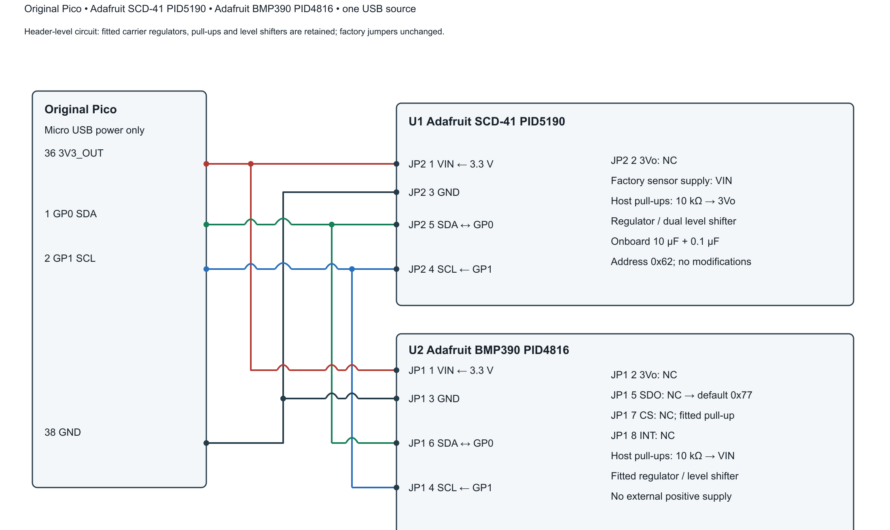
Feed measured BMP390 pressure into SCD41, verify100Pa command units and readback, and reject stale updates without confusing compensation with CO₂ calibration.
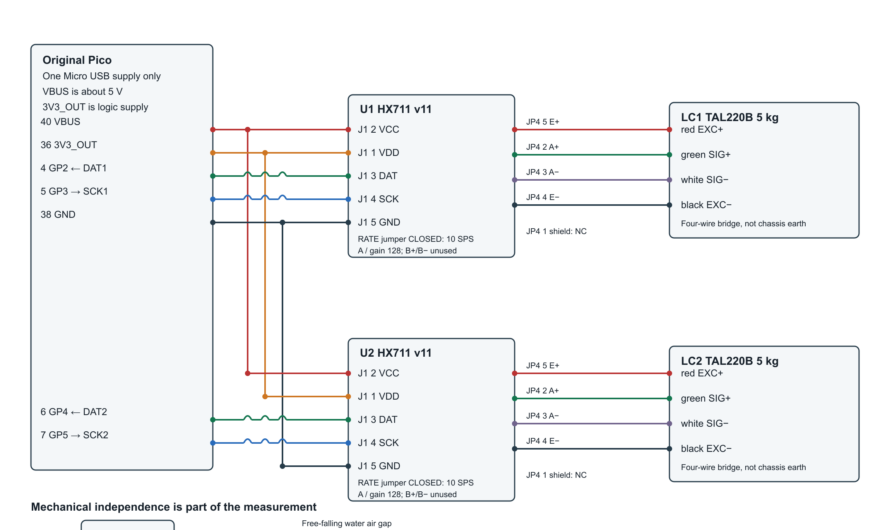
Weigh a pot and its drainage collector on independent HX711 platforms. Use separate calibration and observed read windows to distinguish compatible transfer from unknown loss.
Combine room humidity and a contacted window temperature, then calculate a conditional margin interval that keeps uncertainty and acquisition timing visible.
Separate signed liquid flow from air and saturation flags, then calculate a conditional subtotal only across usable SLF3S-1300F read intervals.
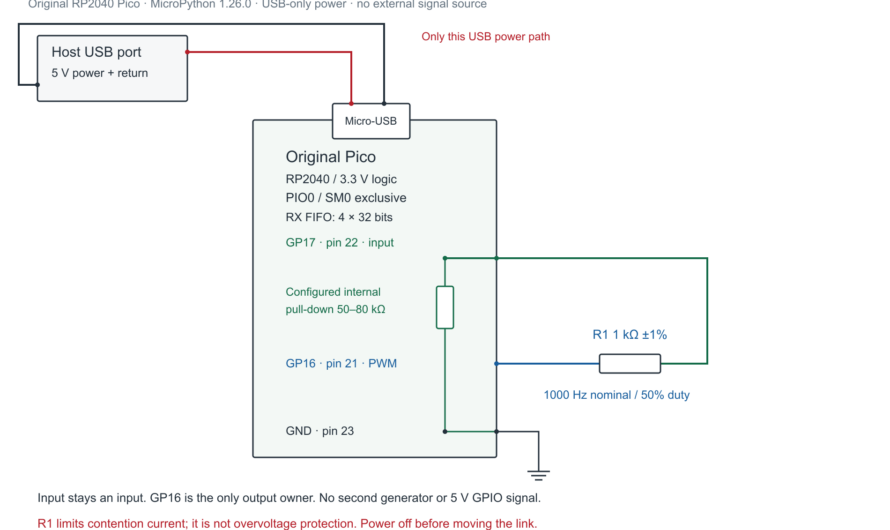
Delay a Pico capture consumer and compare blocking with nonblocking PUSH. Learn why contiguous tokens and a quiet FIFO cannot prove a complete event history.
Restart an MQTT display without mistaking retained room state for a fresh event. Compare live sequence progress, duplicate traffic, boot changes and Last Will.
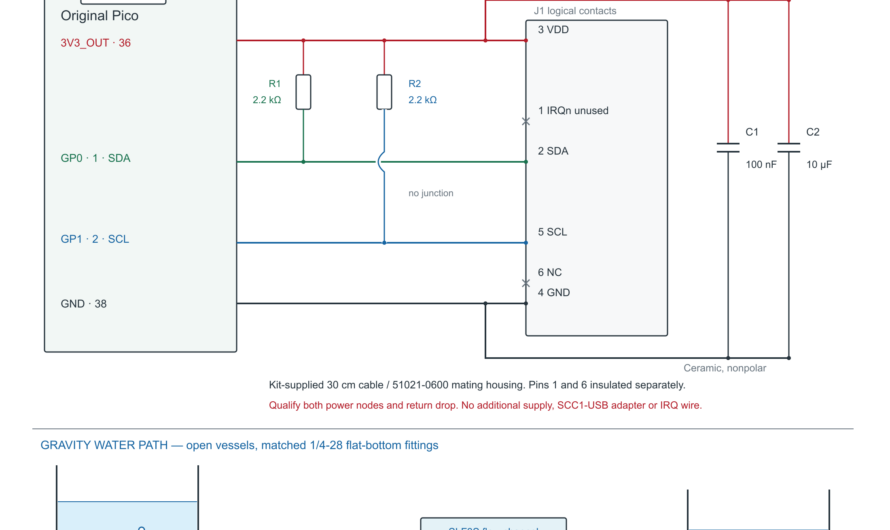
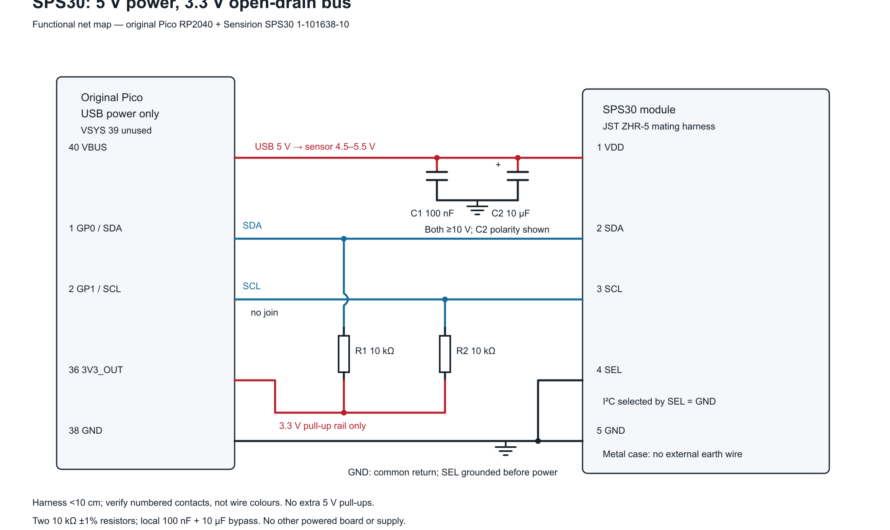
Read an SPS30 with a Pico, preserve the gap during fan cleaning, and reject CRC, status or stale-data failures without presenting cached values as new.
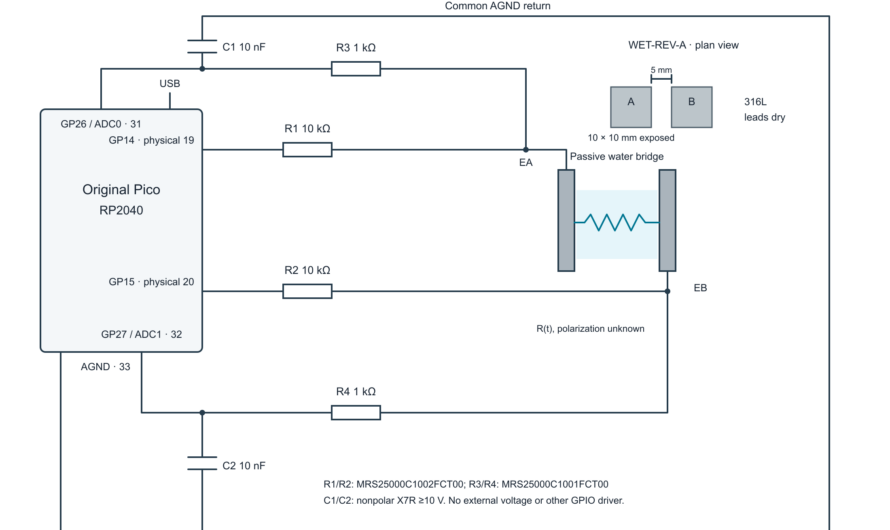
Compare two water-probe polarities with a finite Pico capture, retain raw ADC readings, and calculate a signed late-window proxy without claiming total charge.
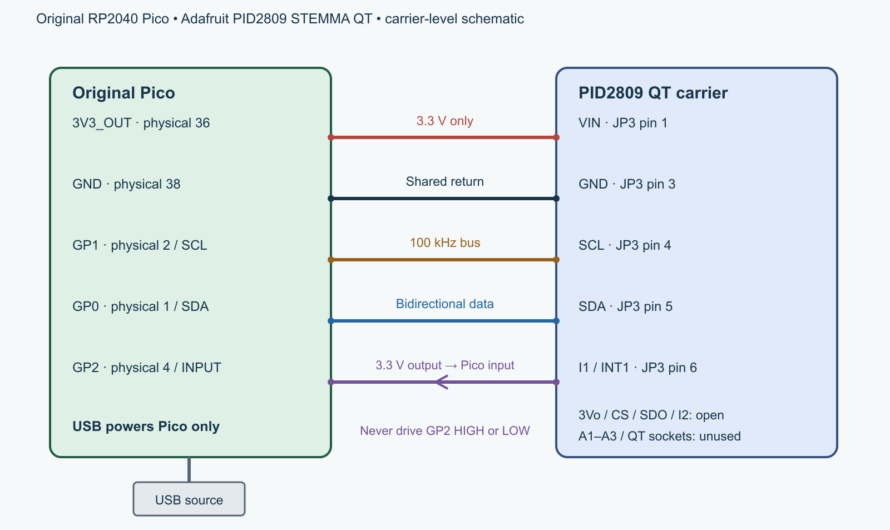
Configure a timed LIS3DH magnitude condition, qualify the latch on a supported board, and service its source without turning merged interrupts into a fall count.
Explore these do-it-yourself project kits. Check the selected option, included parts and instructions on each offer.
Tricky Circuit may earn a commission if you buy through these Temu affiliate links. These are product ideas; they have not been bench-tested by Tricky Circuit and are not verified lesson parts lists.
Supplier product photo
Listing specifies 5-volt direct current. Soldering required; battery and glue not included.
Supplier product photo
Breadboard, wires and assorted parts. Arduino controller board not included.
Supplier product photo
Surface-mount soldering practice. Battery and battery holder not included.
Supplier product photo
Soldering and assembly required. Check battery and track requirements before buying.