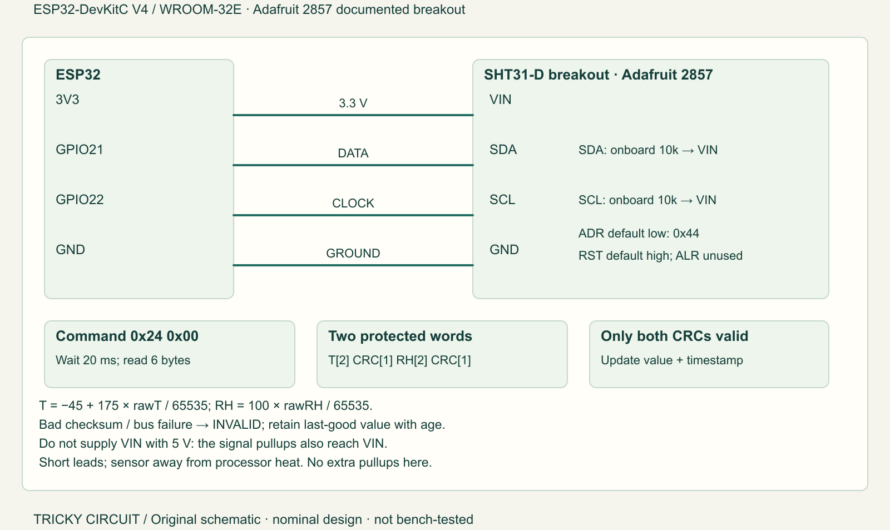
ESP32 Climate Node: An Invalid Reading Is Not Zero
Read a documented SHT31-D breakout with an ESP32. Validate both checksums, calculate temperature and humidity, and label stale readings when communication fails.
Unravel the Mystery of Electronics
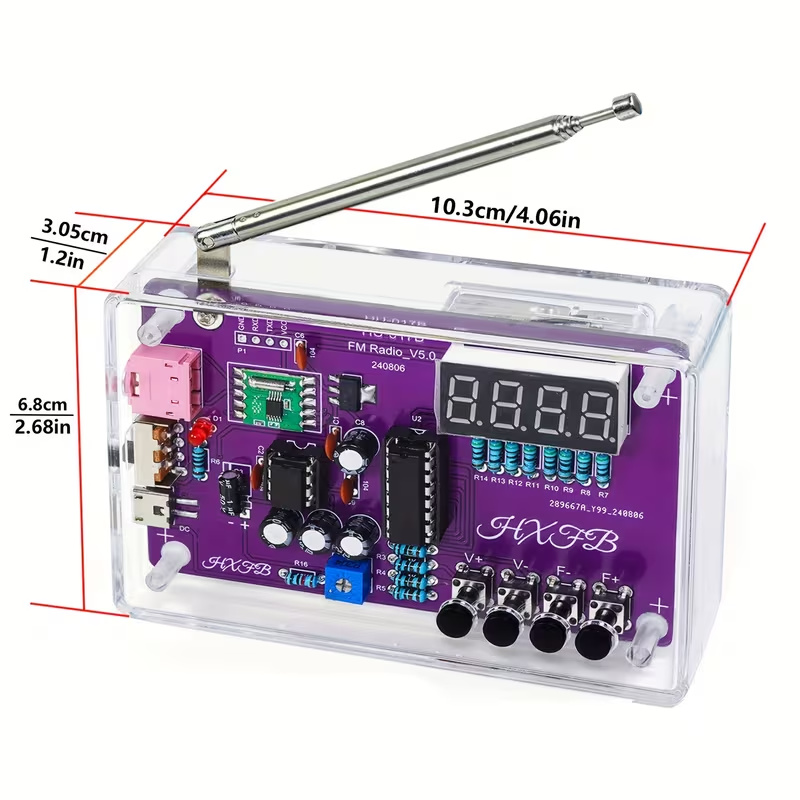
Soldering required. Check the supplied parts and board revision.
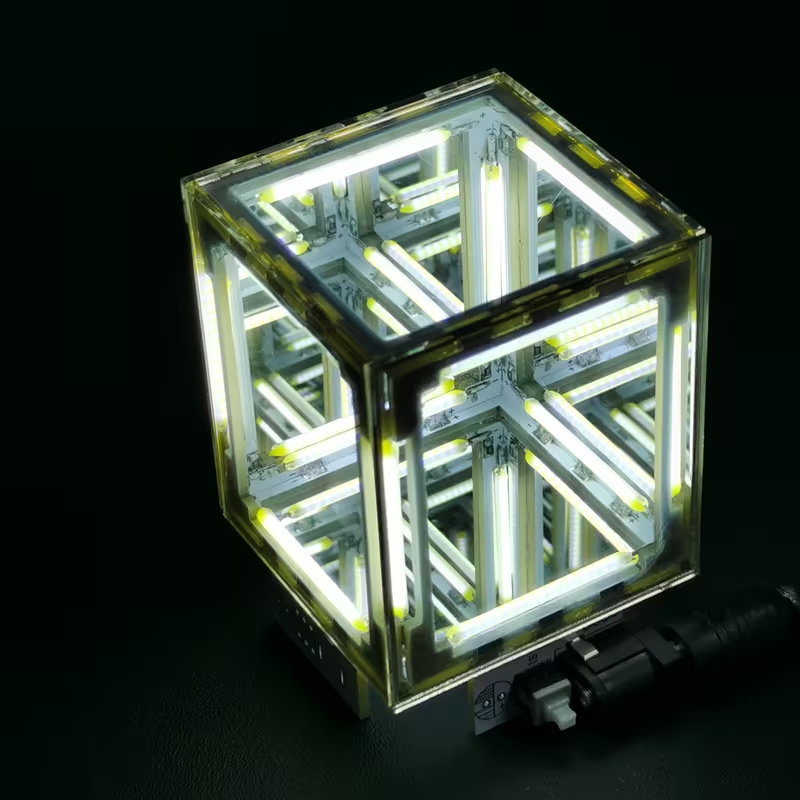
Listing specifies 5-volt direct current. Soldering required; battery and glue not included.
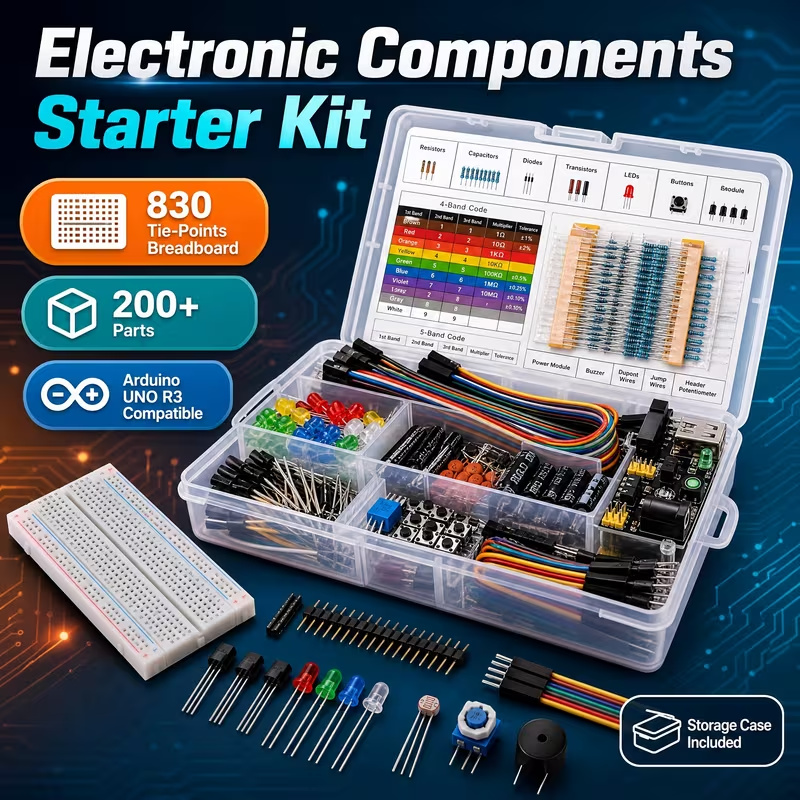
Breadboard, wires and assorted parts. Arduino controller board not included.
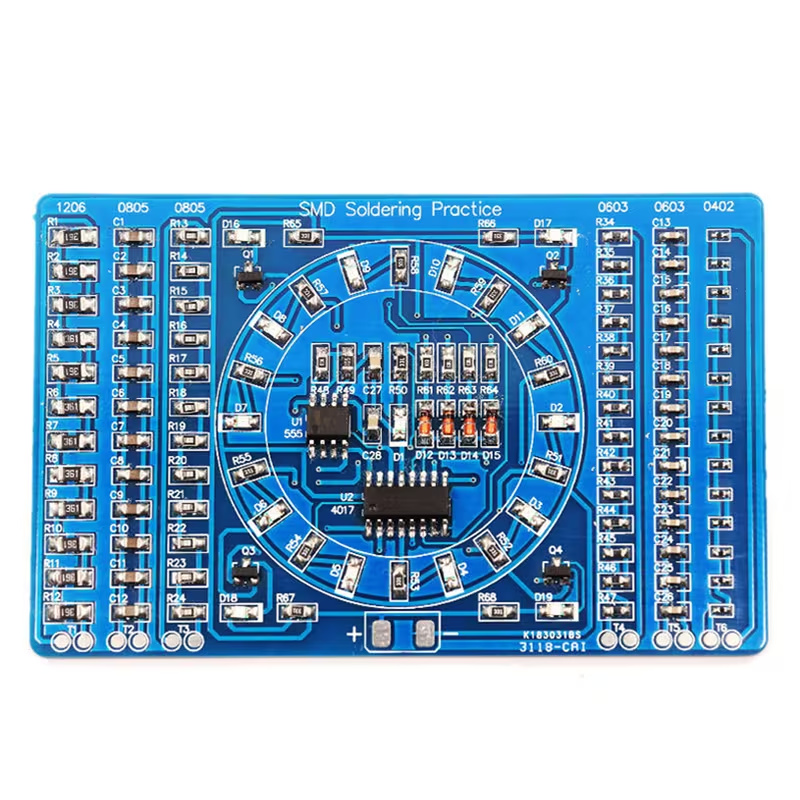
Surface-mount soldering practice. Battery and battery holder not included.
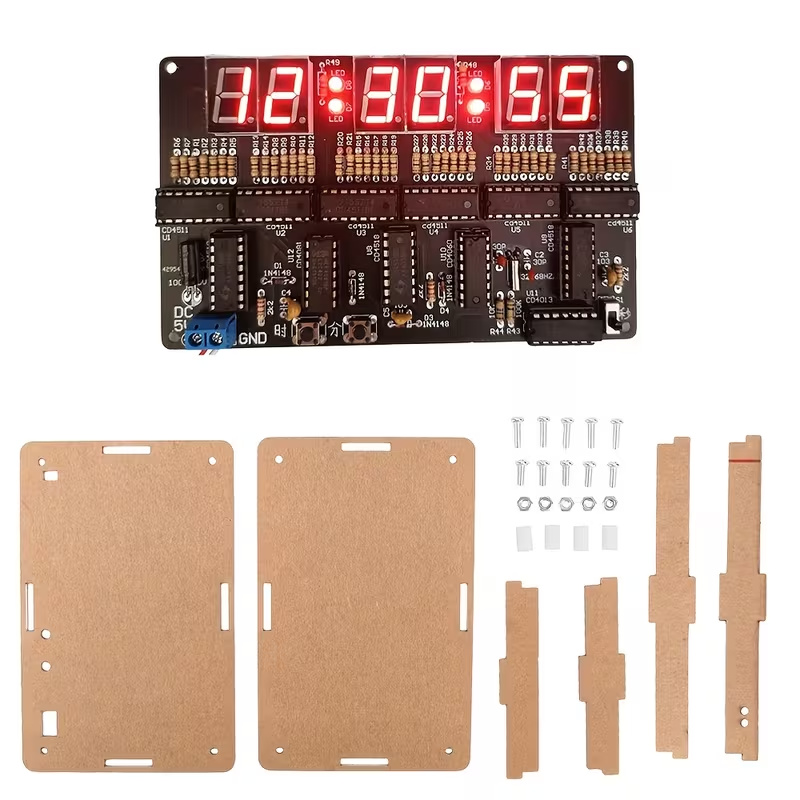
Clock-and-case project kit. Soldering required; check included parts and power requirements.
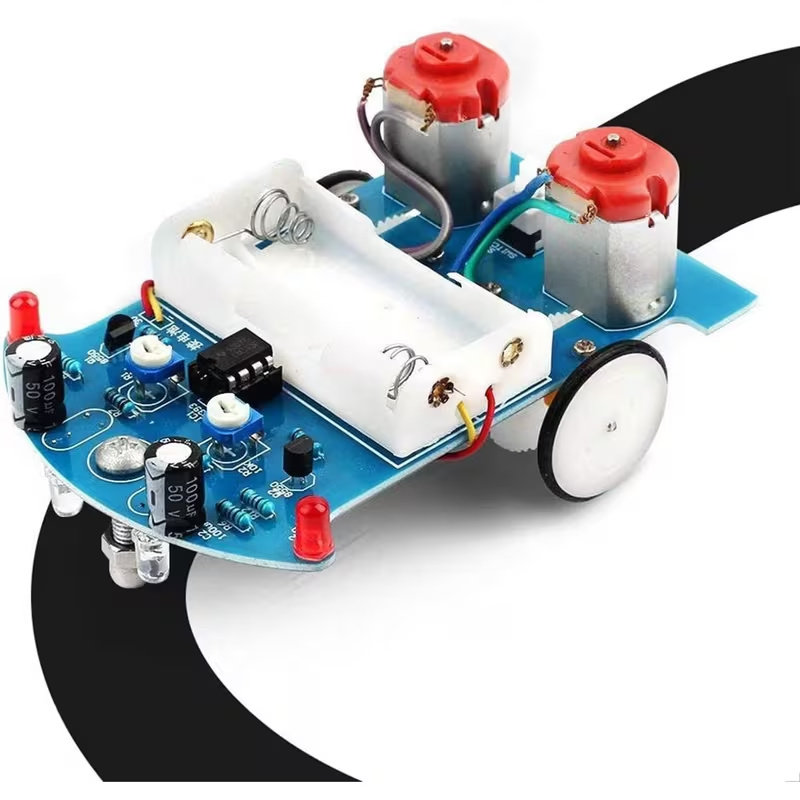
Soldering and assembly required. Check battery and track requirements before buying.
Tricky Circuit may earn a commission through these links. Product ideas have not been bench-tested by Tricky Circuit and are not verified lesson parts lists.
Read a documented SHT31-D breakout with an ESP32. Validate both checksums, calculate temperature and humidity, and label stale readings when communication fails.
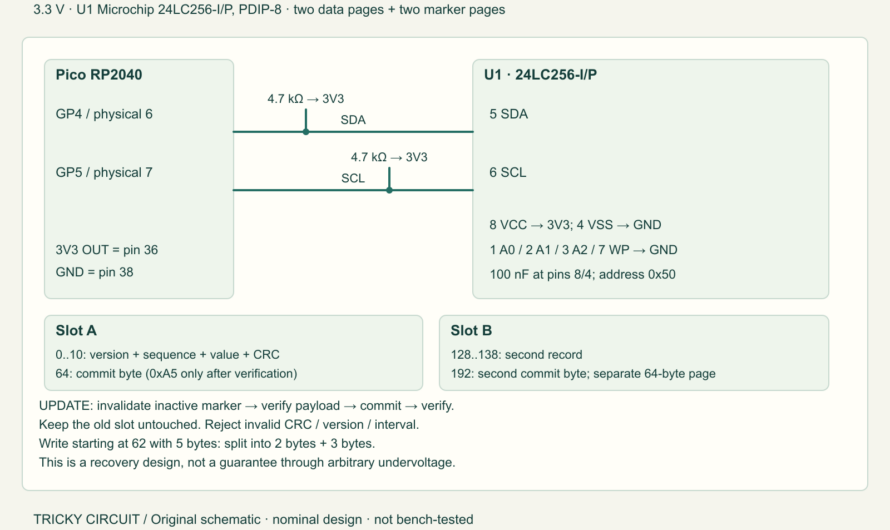
Save one setting in two versioned EEPROM records. Split writes at page boundaries, verify data and recover an older record after an incomplete update.
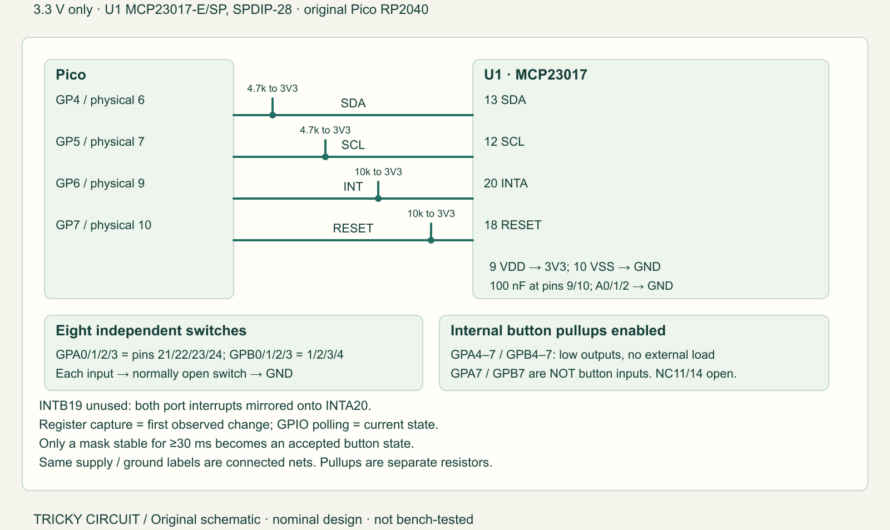
Connect eight buttons to an MCP23017, read captured changes and reconcile the current state. Avoid its output-only pins and distinguish capture from debouncing.
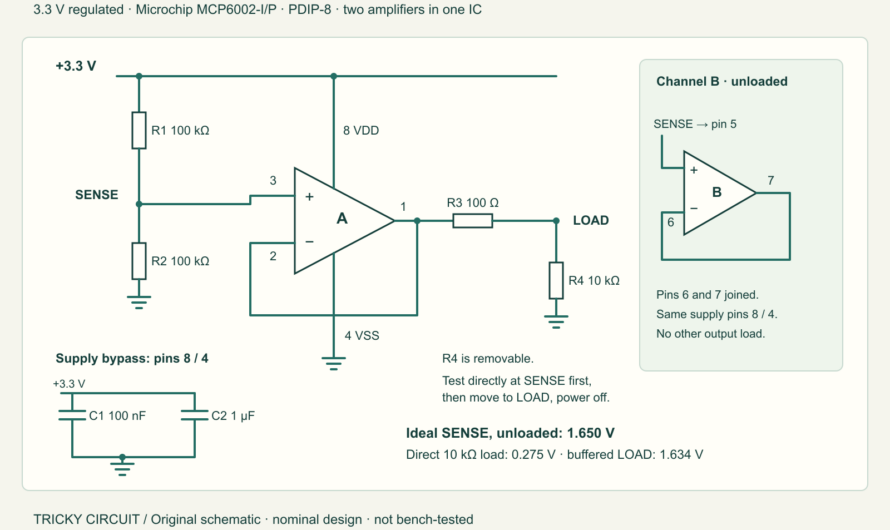
Build a 3.3 V MCP6002 buffer and compare a loaded sensor divider with its buffered output. Calculate meter loading, resistor error and output headroom.
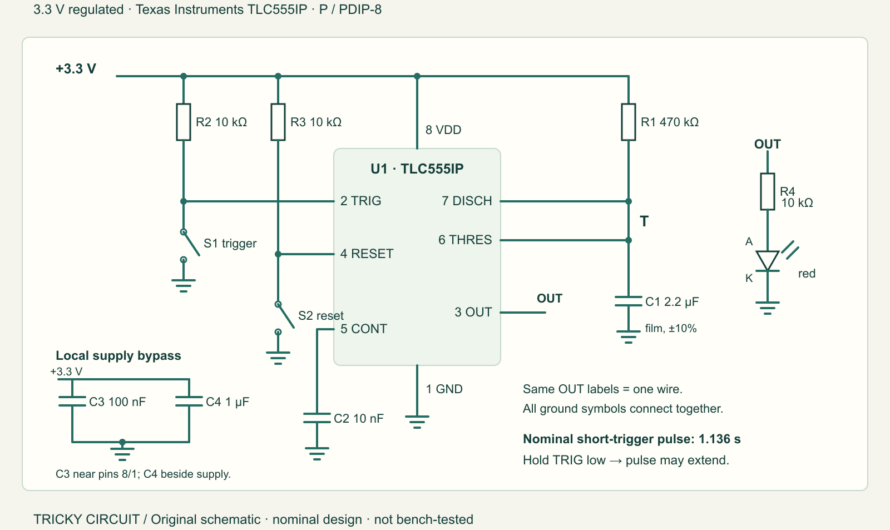
Build a 3.3 V TLC555 one-shot. Calculate its LED pulse, compare a tap with a held button, and understand reset, capacitor leakage and timing error.
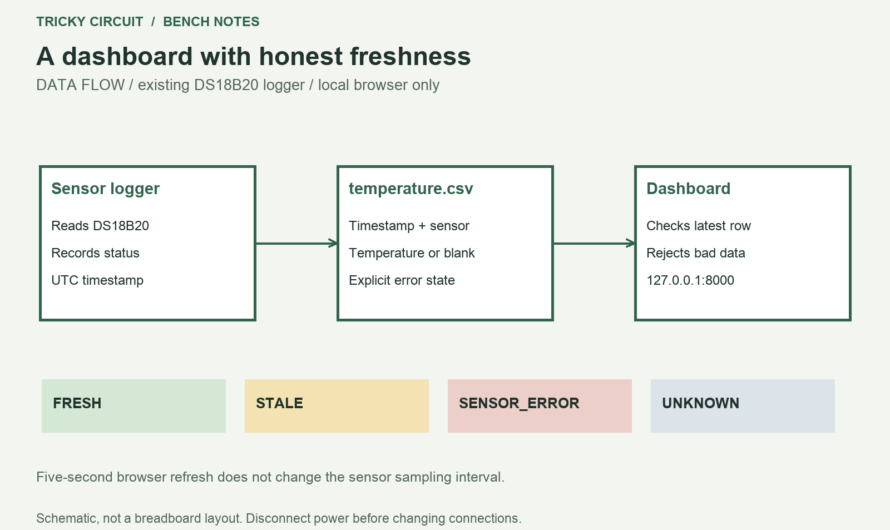
Turn a DS18B20 CSV log into a local Raspberry Pi dashboard. Show fresh, stale, missing and invalid readings separately with a small Python server.
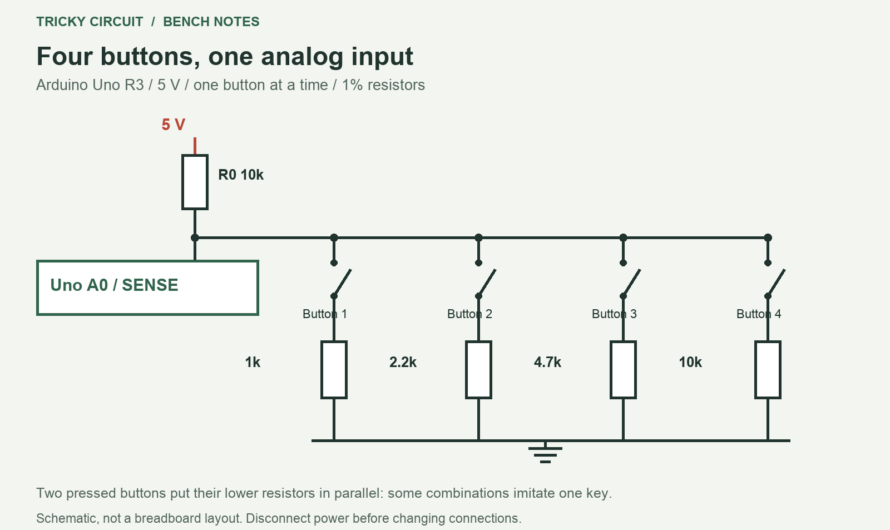
Read four buttons through one Uno R3 analog input. Calculate resistor-divider codes, leave invalid gaps and discover why simultaneous presses are ambiguous.
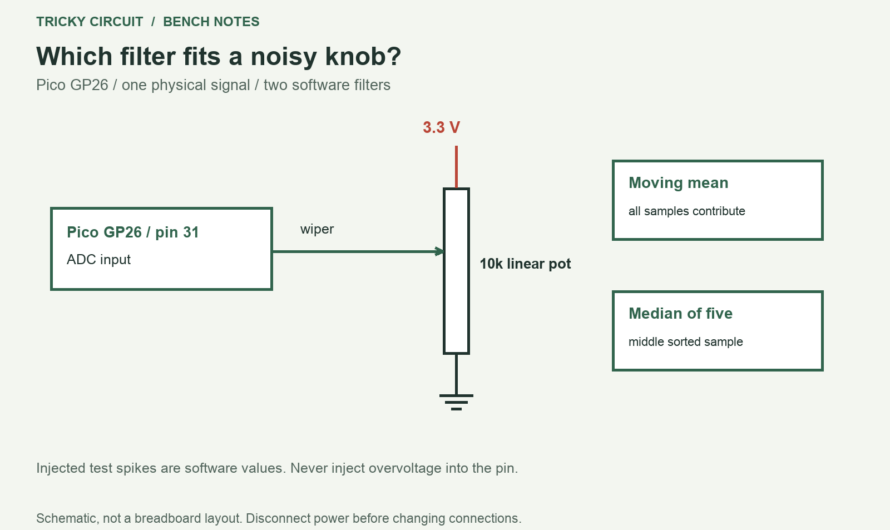
Compare raw, mean and median readings from a Pico potentiometer. Inject labeled software spikes and measure the smoothing-versus-response tradeoff.
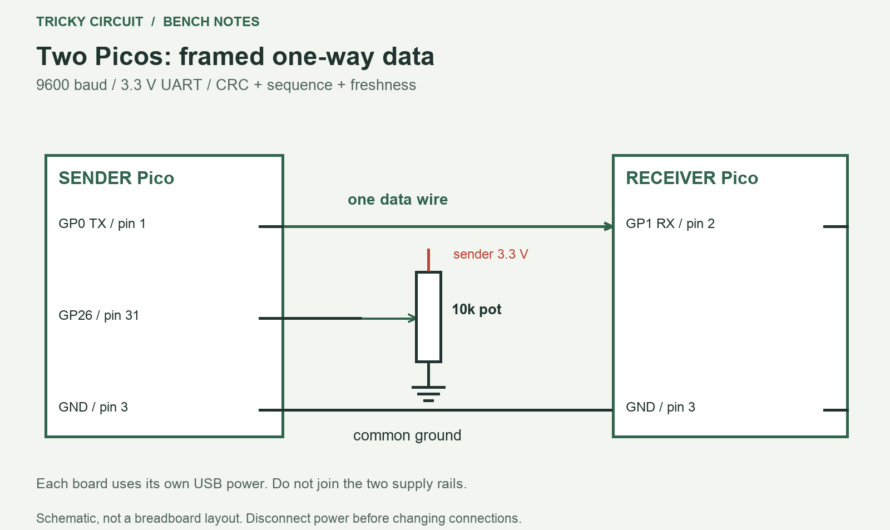
Connect two Pico boards with a one-way UART link. Send framed readings with CRC-16, reject damaged messages and show when data stops arriving.
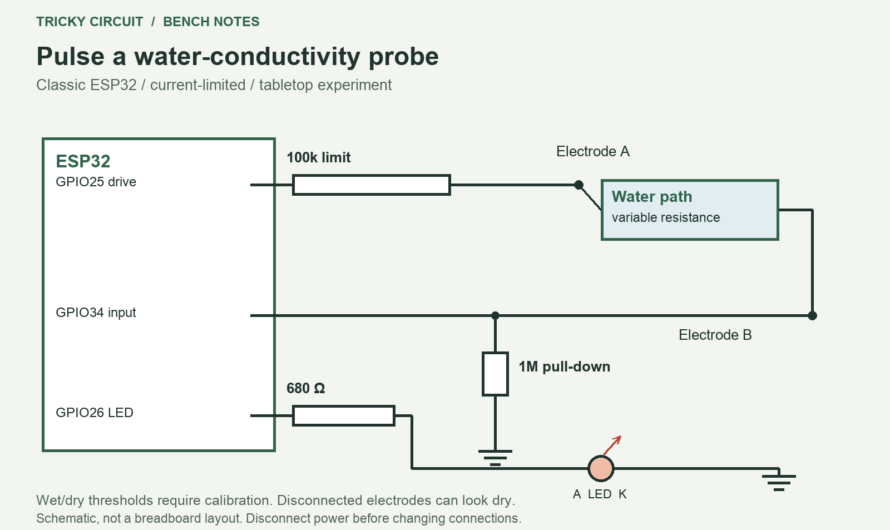
Build a low-current water-conductivity experiment with an ESP32. Pulse the electrodes, calibrate wet and dry readings and understand corrosion limits.
Explore these do-it-yourself project kits. Check the selected option, included parts and instructions on each offer.
Tricky Circuit may earn a commission if you buy through these Temu affiliate links. These are product ideas; they have not been bench-tested by Tricky Circuit and are not verified lesson parts lists.
Supplier product photo
Soldering required. Check the supplied parts and board revision.
Supplier product photo
Listing specifies 5-volt direct current. Soldering required; battery and glue not included.
Supplier product photo
Breadboard, wires and assorted parts. Arduino controller board not included.
Supplier product photo
Surface-mount soldering practice. Battery and battery holder not included.
Supplier product photo
Clock-and-case project kit. Soldering required; check included parts and power requirements.
Supplier product photo
Soldering and assembly required. Check battery and track requirements before buying.